
This story originally appeared in Issue No. 01 of Southlands. You can escape your screen and dive into a print version of the story by ordering a copy in our shop. And be sure to subscribe to receive the next two issues.
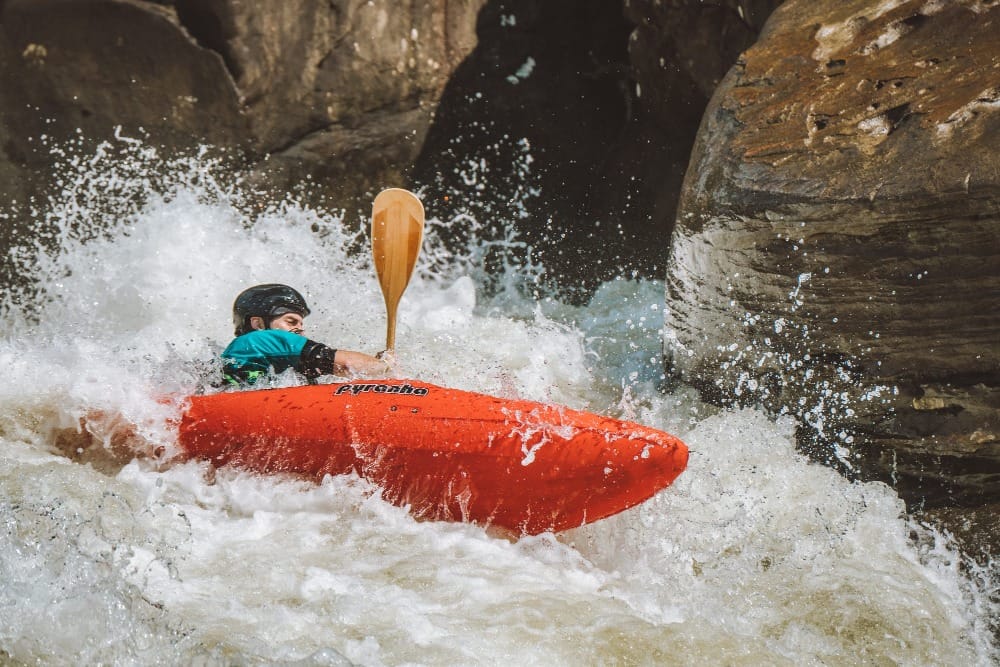
They call it a “mystery move.” If you don’t know what you’re seeing, it can look like the river swallowed someone whole. It usually happens at a seam, the place where the powerful downstream current bumps against the slow-moving, recirculating flow of an eddy. In the wrong water—a tidal inlet, say—such hydraulics can sink a fishing boat. But when flow, river stricture, and depth align, the seams are portals that invite corkscrewing paddlers into a weightless, swirling, breathlessly trance-like realm, just for a few seconds— maybe a minute.
A mystery move requires something called a squirt boat—a skinny, low-volume kayak that looks like it’s been vacuum-sealed around the paddler—and both are a niche within a niche, the center of a Russian stacking doll of outdoor recreation that traces, like most things in American whitewater boating, to the central Appalachian Mountains.
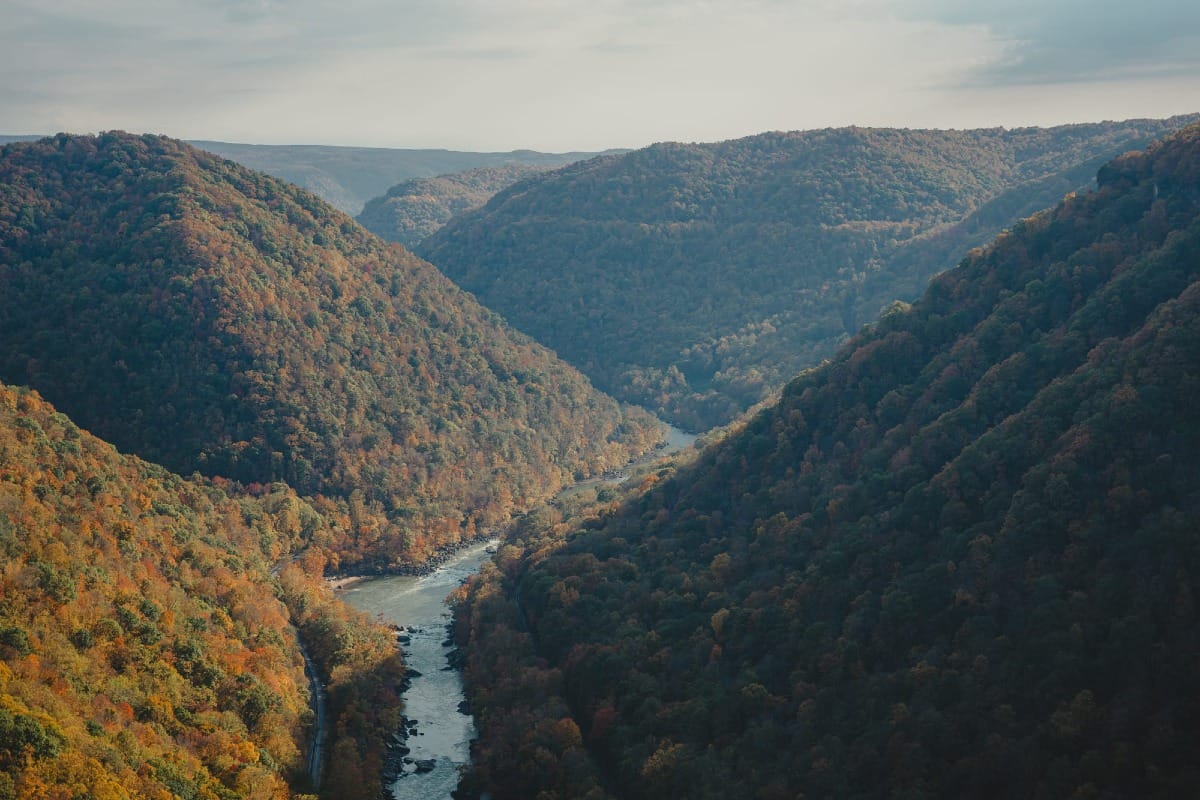
This is a twisting, eroded, geologically convoluted maze of water: There’s the Youghiogheny River in Pennsylvania (aka the Yough, pronounced “yock”); in West Virginia, there’s the Cheat, New, and Gauley rivers. The adjacent watersheds tumble down the folded sedimentary beds of shale and cave-laced limestone. The resulting Class III-V whitewater has, for half a century, attracted a lineage of makers with a particular mix of teenager-like risk-tolerance, mad-scientist ingenuity, backwoods thriftiness, and a bootlegger’s disappreciation for authority. The region birthed some of the first producers of the composite helmet, Kevlar skirts, and several whitewater boat designs. And then there is the wooden paddle.
For most outdoor sports, the arms race of gear never stops. No one, aside from the occasional contrarian, still carries an external frame backpack or uses wood skis. But in whitewater boating, the wooden paddle endures, in part because it’s the perfect tool for both Appalachia’s steep, tight, rocky rivers and for the finesse of whitewater’s squirt-boat ballerinas.
The Godfathers
On the Yough, at Ohiopyle—a state-park-slash-town of 37 residents that exists, essentially, for recreational whitewater— the river forms a horseshoe where paddlers can put in and take out at almost the same spot, with seven Class III rapids in the intervening 1.5 miles. Along with Albright, West Virginia, a small town on the Cheat River, it’s the Hartsfield-Jackson Atlanta International of East Coast whitewater’s visionaries, the playground of two wooden paddle godfathers: Keith Backlund and Jim Snyder.
This post is for paying subscribers only
Subscribe now and have access to all our stories, enjoy exclusive content and stay up to date with constant updates.
This post is for paying subscribers only
Subscribe to get access to this and all premium content.