

The North Shore of Ross Barnett Reservoir is a strange, wild place compared to the rest of the Jackson metro. Tributaries and inlets of Pelahatchie Bay cut into the land in sneaky, winding streams, often clogged with water hyacinth and salvinia.
These sleepy inlets — really, ditches that drain to the bay — are the perfect place for the turtles I release on behalf of the Central Mississippi Turtle Rescue. Acceptably far from busy roads, in waters with plenty of foliage cover from avian predators, these head-started hatchlings and rehabilitated adults will begin a new life in a safer place than where we found them.
While three-toed box turtles and other land turtles have relatively small natural ranges in the wild and must be released exactly where they were found, aquatic turtles can be released in whatever watershed they came from. They’ll happily build a new life where they’re left. The turtles I have to release today are bound for the Upper Pearl River Watershed — that is, anywhere north of the dam and levee that hold back the Ross Barnett Reservoir.
In the back of my Subaru, they scratch impatiently at their Sterlite tubs — the only home they have known these long months in our Turtle Intensive Care Unit. The head-started hatchlings began their life in the TICU’s incubator, and this is their first time outside since overwintering at the rescue. Some of their mothers were released last fall, after they laid eggs in their boxes; other eggs were removed from mothers who had such extensive injuries that they did not survive.
My wife and I unload the boxes together and set them at the bank of the creek. It is mid-July; the turtles could’ve been released as early as May, but the rescue got so busy so suddenly that we didn’t have time until now. While my wife films for the Rescue’s Facebook page, I get to work.
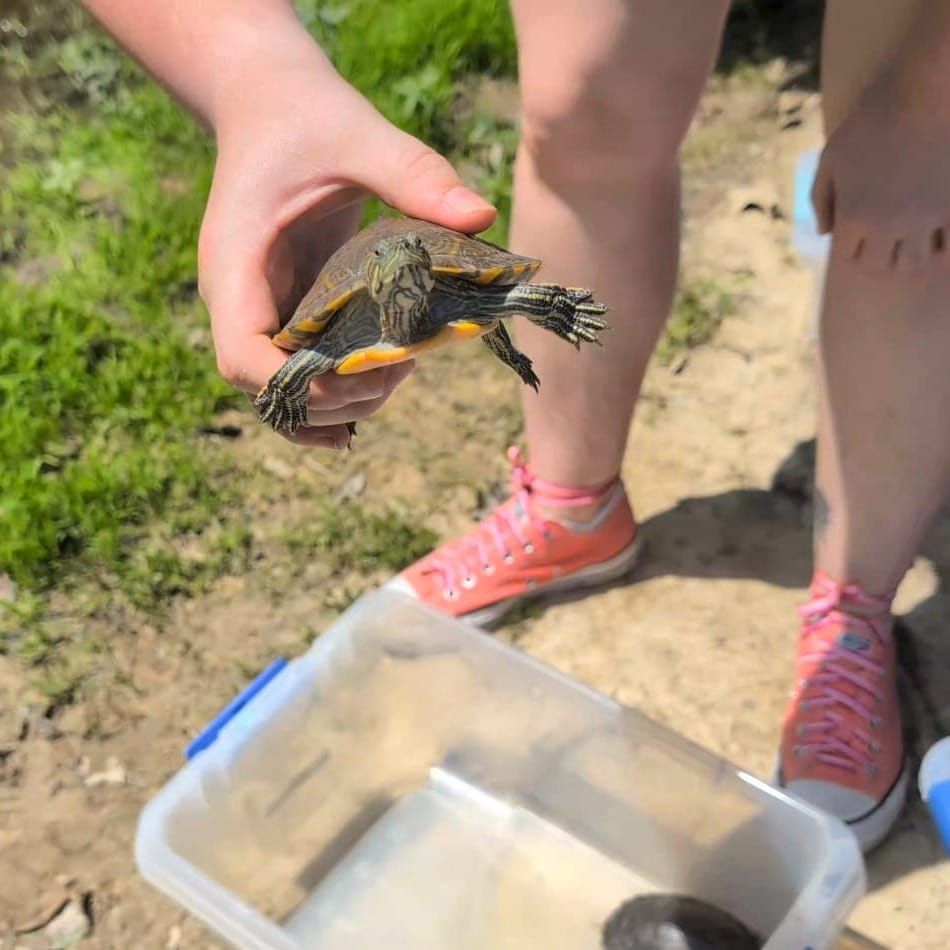
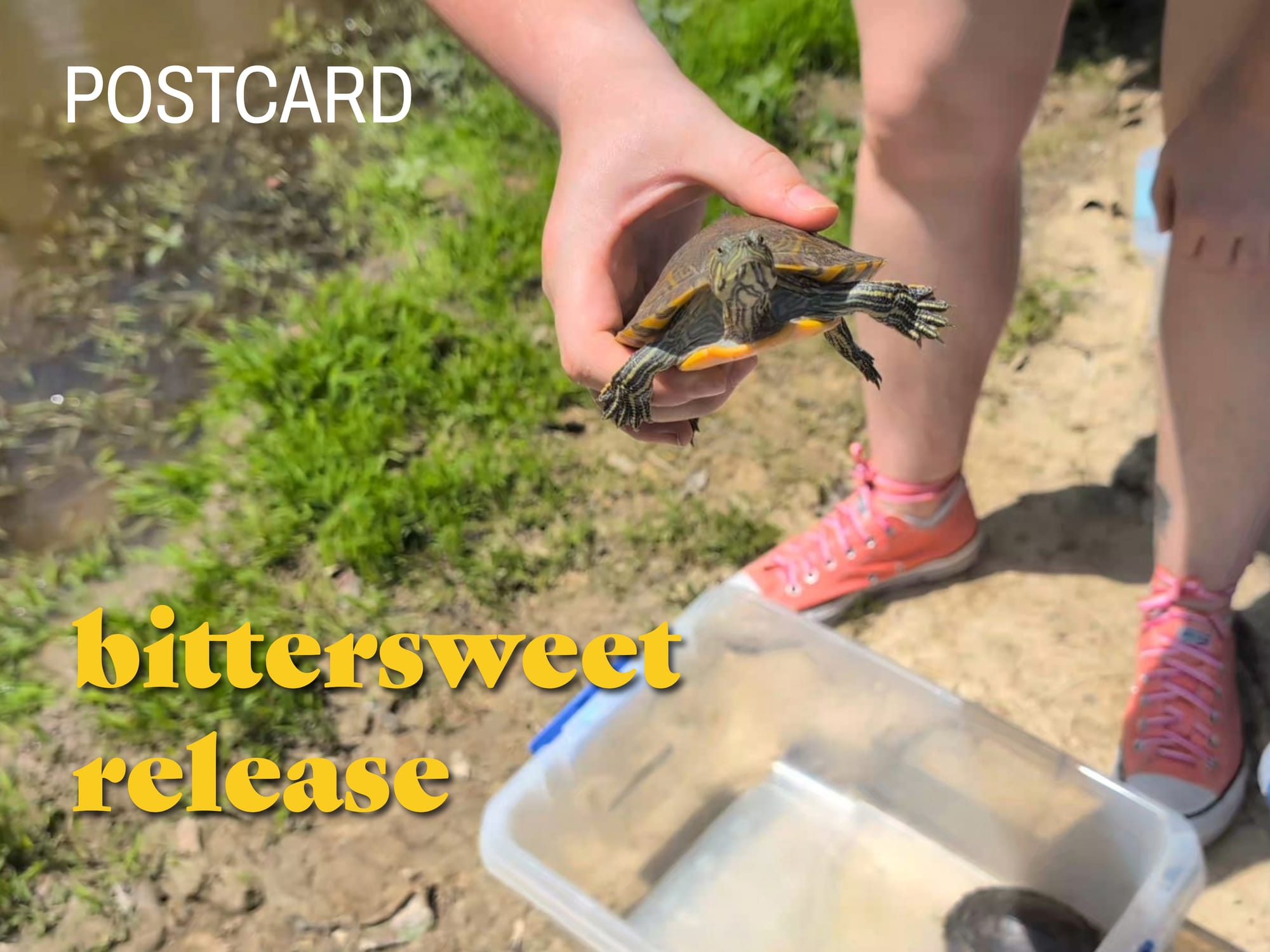
First up is Cassie, an adult red-eared slider (every turtle at the rescue gets a name). I have cared for Cassie for the past six months, since my rotation took me to her rack in the TICU. The chip in her shell is all that remains from when she was hit by a car last fall.
A few more adult turtles follow, and then it’s time for the babies. Alaina, a gorgeous river cooter, had five eggs hatch in the TICU incubator. One remains behind, because she is still too small to be released, but I set four healthy (unnamed) turtles in the water and watch them shoot off into the muddy waters of the creek.
It’s always bittersweet to see turtles go. Over months and months, I’ve learned whether these turtles preferred bugs over worms, or Mazuri pellets over ReptoMin sticks. I’ve cleaned their boxes, changed their bandages countless times, checked them over for signs of illness. And after all that work, I set them on a riverbank to face the world once again. The cars. The lawnmowers. The chemical sprays and wildfires. As the last hatchling slips into the water, I wonder what the world will look like at the end of their hundred-year lifespan, if it isn’t cut short.
After the turtles scurry through the foliage at the bank and into deeper water, it is time to pack up. After closing the now-empty boxes, I turn back to the water one last time. The only sounds are the rushing of cars on the North Shore Parkway and a distant bird. In the center of the creek, two cooter babies poke their heads above the waterline. Their heads disappear into the muddy depths only when I start the car to drive away.