

Our second issue, PUBLIC/PRIVATE is now shipping! Over the coming weeks, we'll be publishing new stories from the issue. Not every story will become available to read for free, so if you'd like to access the full issue, you can buy a copy in our shop or subscribe.
What’s it like to be chased?
Please don’t tell my wife, but it’s a symphony of terror tightly bound by profanity, vulgarity, and obscenity. It’s breathing hard at the top of a hill (or, worse, cresting one hill only to find another looming), it’s seeing a flash of movement and color and rapidly approaching fur and fluff that is coming faster than the eye can track, and it’s the immediate switch flipped into hard-driving flight and self-preservation—and in that moment, you are an antelope in the African savannah, and something just ahead is parting the grasses like a demented Moses, and so life flashes before your eyes and you stamp out the ridiculous fantasies of the African savannah, and you pedal and do not feel your feet and legs and knees burning, though they are all surely fully ablaze. And in that moment of not-feeling, your eye catches another fleeting glimpse of your dogged (sorry) pursuer churning up more dust than the biggest big rig on the dustiest road, and somewhere in there you realize that your heart is dangling like a stone from your uvula, but you can’t gulp it down because that is simply where it lives now. And the dog is at your heels and it’s been there all along. In a moment of clarity, you attempt to reason with the dog, offering arguments like, “Go home!” and “Fuck off!” In a desperate bid to establish the fact that you and the dog’s owner are really not so very different, you scream, “Good dog! Good fuckin’ dog!”
And maybe those work, you can never tell, but eventually the dog gives up the hunt, and the antelope lives to bike another day, with its heart permanently lodged in the narrow pocket of its throat.
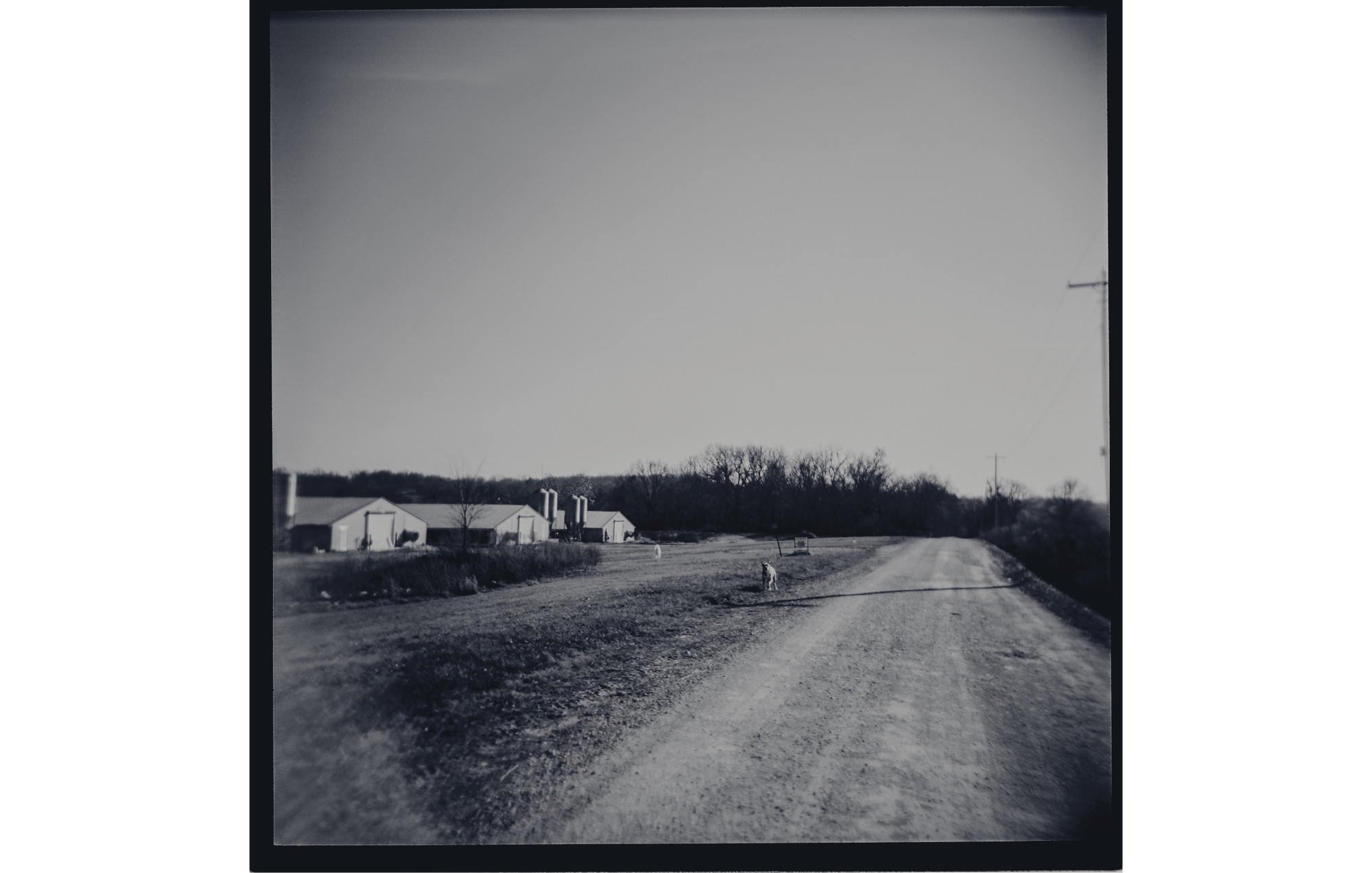
If you’ve driven the dirt roads of Northwest Arkansas in the past few years, it goes without saying: the place isn’t what it used to be.
Not that anyone around these parts is surprised. We’ve been able to read the writing on the wall for decades. It’s struck in stone, practically in all caps: Bentonville is a company town, and while the company in question—Walmart, which has been rooted in Bentonville since 1950, when Sam Walton opened Walton's 5&10 on the downtown square—has reshaped every American small town, drained them all of local marrow, it has arguably reshaped this one most of all, albeit in the opposite direction. The company’s founding family drove a decades-long effort to produce a suitable home for the executive set, which culminated last year with the completion of a new “Home Office” downtown. It is a not-so-subtle twist of irony that this sprawling, Silicon Valley-style campus has been made to resemble a bustling small town district, with satellites of local shops and restaurants anchoring the first-level storefronts, a picture-perfect small town made even more perfect.
The influx of cash hasn’t stopped at Bentonville’s borders. It’s rippled outward, finding the path of least resistance on the three-thousand-odd miles of unpaved roads that spread like a network of mycelium through the surrounding rural communities. Although the roads themselves have been slow to change, the shifts have come fast along them. Hundreds of acres of family farms have been splintered, fragmented, and fractured into countless smaller parcels and then scooped up by wealthy transplants looking for a “country lifestyle.” The predictable upshot has been a series of cultural collisions that now play out on a daily basis between new arrivals and longtime residents.
And their dogs.
That is somewhat problematic in a place that, as a part of its makeover, has begun to bill itself as the “Mountain Biking Capital of the World.” On the local gravel cycling Facebook pages, few posts get more engagement than those about notoriously aggressive dogs. More often than not, they’re simply warnings about those dogs’ locations. Others take a more visceral tack, with photos of bleeding ankles. Almost always, however, fellow riders offer commiseration (“I’ve narrowly escaped these dogs as well.”), recommendations (“Call the police. This isn’t a discussion. You must call the police.”), and suggestions (“Maybe go back with bear spray or legal gun.”).
What is never discussed in all of this hand-wringing is the fact that those dogs and their owners likely far predate the people riding their bikes here.
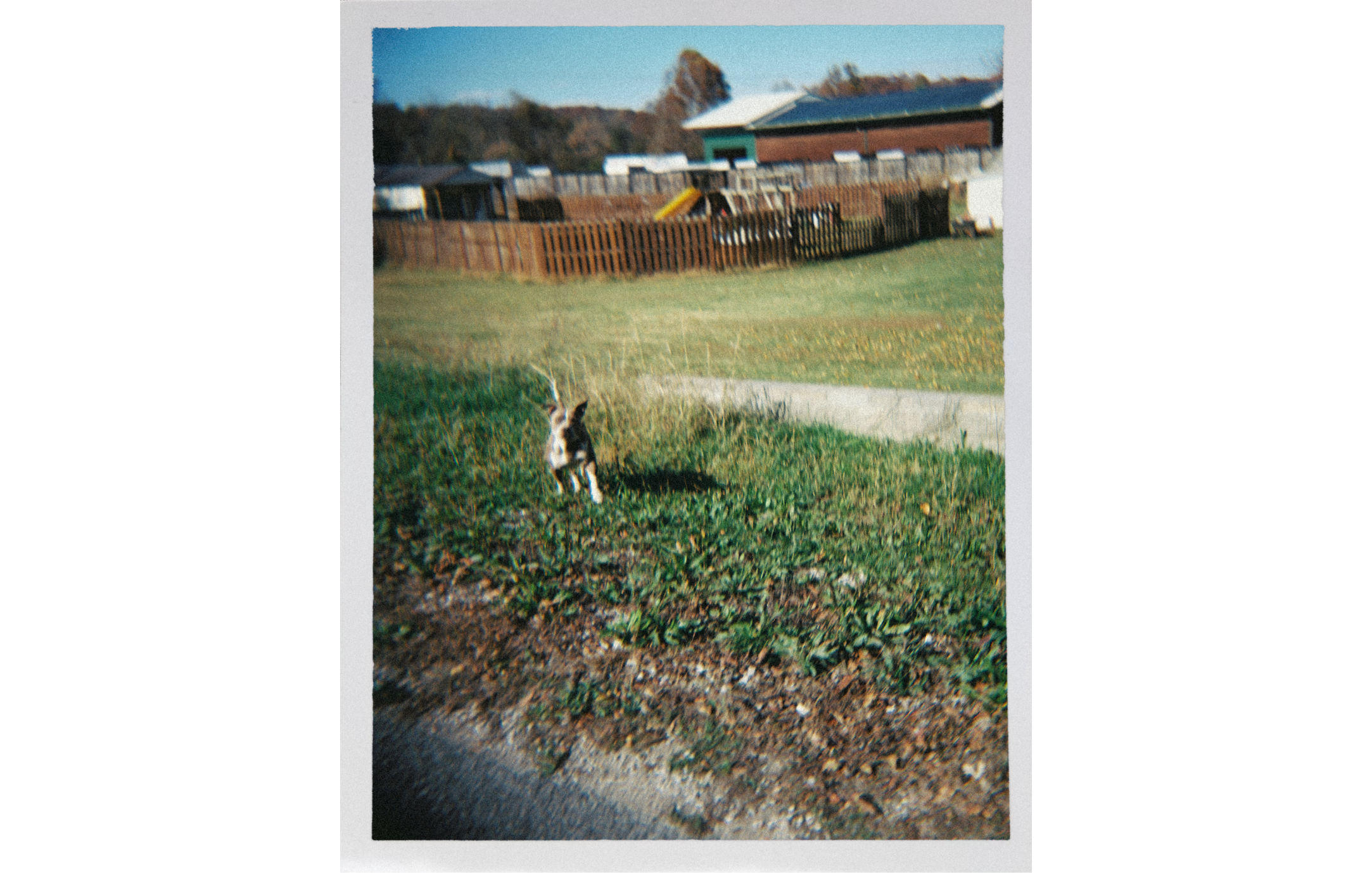
I call them yarddogs. It’s a shorthand, yes, a suturing, two words mortared together. But it’s something more, too, a way of lumping together two pieces of unknown in one memorable word, of adding emotional distance—and thereby keeping the dogs and their owners abstract, not beings whose own experience needs to be considered.
But then I remind myself that I'm toeing the line of hypocrisy. After all, my wife and I own a piece of land in neighboring Washington County, down a dirt road, a place you only go if you have a reason. We own a dog, a German shepherd, who growls from the front window when someone walks too close to our house. We recently got another German shepherd puppy, and I wonder sometimes: when we finally build a home on that long dusty road, might our dogs one day be yarddogs, too?
They are all good dogs to someone.
They are slipper-carriers, slobber-mongers, squirrel-pursuers, lovey-dovey bark-before-biters, best friends to some man, woman, or child. Mind you, this can be easy to forget. Especially when they come bounding from behind burned-out cars and barbed-wire fences, churning clouds of dry dust in their wake, in hot pursuit of the two-wheeled stranger-demons who’ve dared to step foot in front of their house. And yet, no matter how many times I’ve been chased by one-, two-, three-, four-dog packs down country roads in Northwest Arkansas, I can’t help but think, Y’know, I really can’t blame ’em. And then I begin to think, too, What is it like, really, to be on the other side of the fence?
There is not, curiously, an easy means of determining how many cyclists have been menaced or bitten by dogs. The Washington County Sheriff's Department cannot search their database for terms like “dog” and “cyclist.” The Benton County Sheriff’s Department is more accommodating, and upon request provides eighteen incident reports from January 2020 until present. The Arkansas Department of Health, which receives all reports of such cases via its ”Animal Encounter Intake Form” cannot search files earlier than March 2024. “Those forms are paper,” they say, “and there is no way to search the records manually for the words requested.”
The closest to an answer I get comes one night when I attend the inaugural meeting of a newly formed local cycling advocacy group, standing-room only in a Bentonville coffee shop. The meeting is a direct response to two recent instances of cars hitting cyclists: One victim was a professional racer. The other, a thirteen-year-old girl. Both of them are here tonight. It is a strange thing, knowing that despite the mind-boggling amounts of money devoted to making this place a destination for all manner of cyclists, a driver can kill a cyclist and only have to pay a fine. At one point, as other risk factors are discussed, a lawyer who’s consulting this newfound advocacy group turns to the audience and asks how many people have been chased or bitten by dogs? Almost every hand in the room goes up.
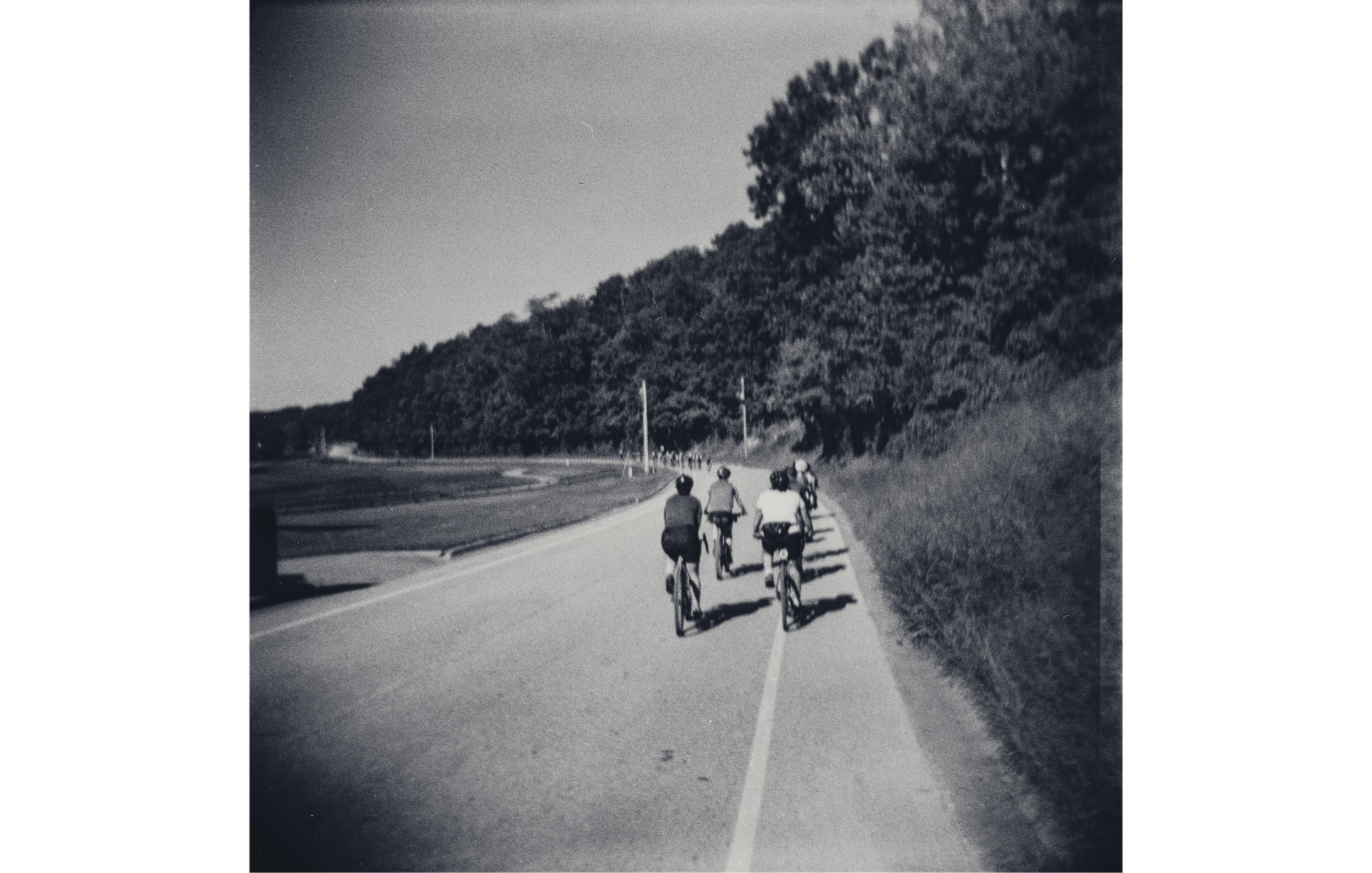
"These roads [that rural residents] have known as theirs for so many years, all of a sudden, different groups of peoples [are] out here and joining them, too," said Wes Evans, a beef producer and Benton County Farm Bureau Secretary, in a 2023 radio interview. "And a guy wearing overalls seeing a guy wearing tights going up and down the road is just another one of those aspects of being uncomfortable."
To clarify: the “guy wearing tights” is a gravel cyclist. Better known as a cyclist riding a hardier bike with knobbier tires capable of handling the aforementioned rough-and-tumble county roads. And, in many respects, those riders are the tip of the spear nicking the membrane between rural old-timers and all the newcomers.
And yet, if you’ve ever taken a gravel bike along rural back roads then you know the gap between you and the rural residents feels only wider as you’re riding past their home, waving to them in their combine, choking on their dust. To be sure, you’re closer than you’ve ever been. And yet that physical proximity belies the real distance, masking it with a false sense of intimacy. In truth, you’ve never been farther apart.
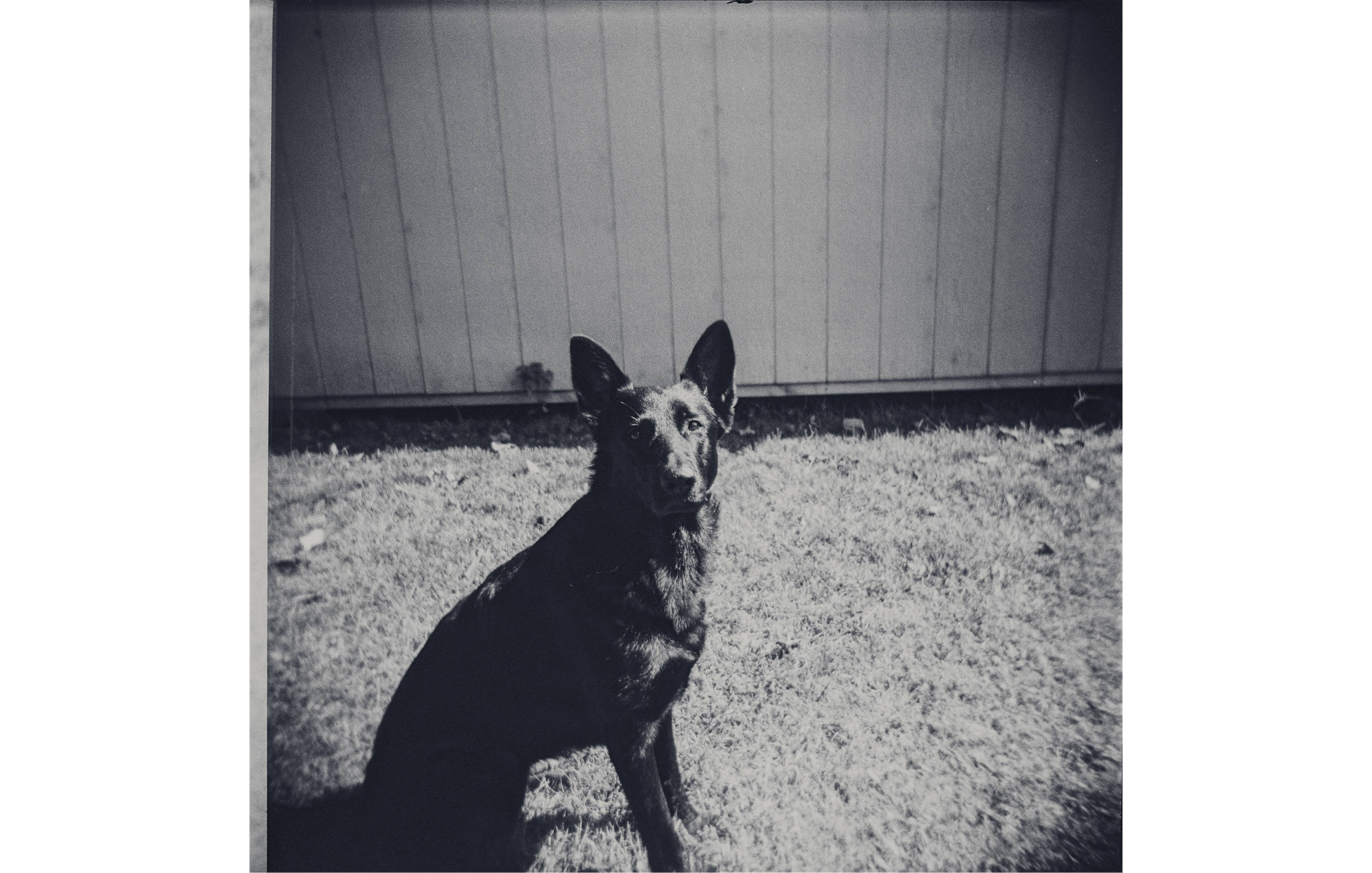
Red is a yarddog. He is four years old, loves sunbeams, pork chops, and his best friend, Henry the cat, is disinclined to pose for photos unless at least two treats have been proffered as incentive to stand on all four paws, which he will do for no more than three minutes, and sleeps in the backroom of Kurt Ferden’s shop where a doormat reads, “I woke up like this.” Kurt and Red technically live in Bentonville. But the Bentonville they live in feels worlds away from the square downtown, from the new Home Office, from the high-end restaurants, traffic, and bikes.
Kurt is well familiar with the sprawl. When he first moved to Bentonville nearly twenty years ago, he built himself a house that was so close to the former Walmart Home Office that he could’ve hit it with a rock. Then growth took hold.
“Pretty soon, you wake up one day—and I could not afford not to sell my house,” Kurt says. “But I don't know, it's growing fast, and it's turned into a bicycle town. I think it's the world's largest, ain't it? Or something. The biggest?”
He sold, and four years ago, he bought a small parcel of land on Highway 279. It wasn’t long before the changes he’d tried to flee started riding on the dirt roads winding around his new home. When Kurt first moved, Red was a puppy who spent his days roaming around the property. One day, Kurt says, a group of young cyclists was riding along a nearby dirt road when they stopped to say hello to Henry the cat. Red then bounded down the hill, and although some of the details are fuzzy, the upshot was that someone hit Red with a stick and rode off, leaving him with a limp that didn’t heal for the better part of the year.
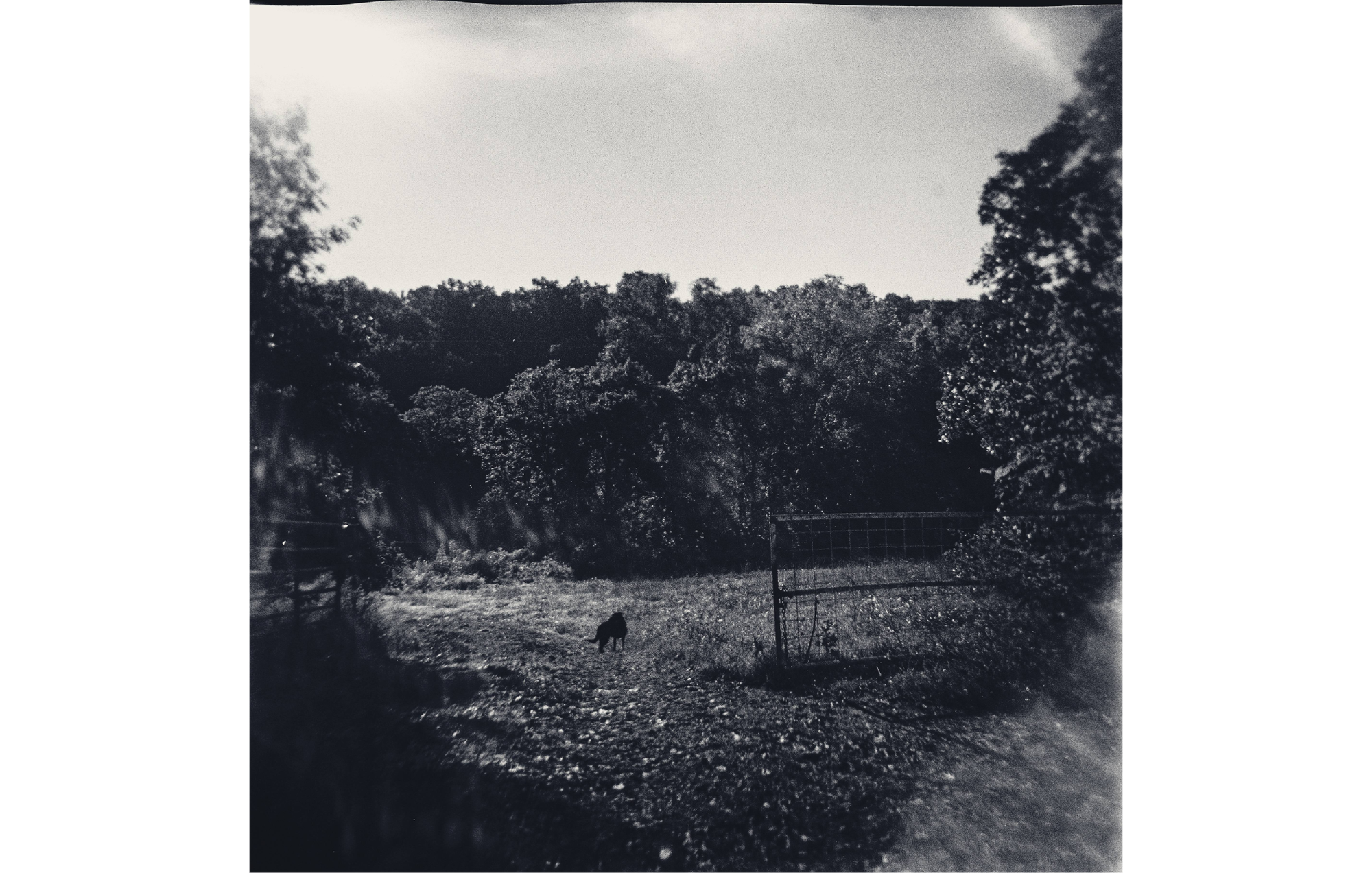
They are every shape and size, they are faster than you think.
They are squirmy, collicked, tick-studded, mud-caked, rascally. They are rough around the edges, making for a bit of easy literary symmetry with the roads they occupy, these dogs. And there is something about them that seems especially at home on these backroads—that makes them feel like they are an endemic species. As if only the conditions specific to these environs, where the specters of red tape and restrictions have not yet descended, would allow yarddogs the necessary freedom to exist and flourish. And there seems to be, in this whole mess, an especially apt metaphor for how an area responds to change: yarddogs are the very furry canaries in the coalmine; they’re the signals that rural life is changing, and likely they’ll be the first to go in the name of progress, which is arriving soon, sooner than you think.
None of this was an accident. In the early ’90s, the region's power brokers and makers were thinking several moves ahead: the Waltons, the Tysons (of chicken fame), and the Hunts (of trucking giant J.B. Hunt) joined forces to wrest from midair, as if by magic, the implements that would drive development in the decades to come. A new airport. Road and water infrastructure. (Unfortunately for contemporary developers, sewer didn’t get the same attention.) Then the Waltons built a world-class art museum, a wave of high-end eateries, a system of trails. The reinvention took hold and then some. By 2023, Bentonville featured more cranes per capita than any U.S. city.
Downtown Bentonville, so carefully planned, feels surreal today—"Disneyfied," "Pleasantville," "gentrification" are the apt words of the critics. And not that it needs to be said, but there are no yarddogs in Bentonville. Not anymore. Here, there are only good dogs. Dogs on leashes, dogs that have been to school, dogs that listen, obey, behave, and will not lunge at every passing jogger.
But, of course, this is not really about dogs at all.
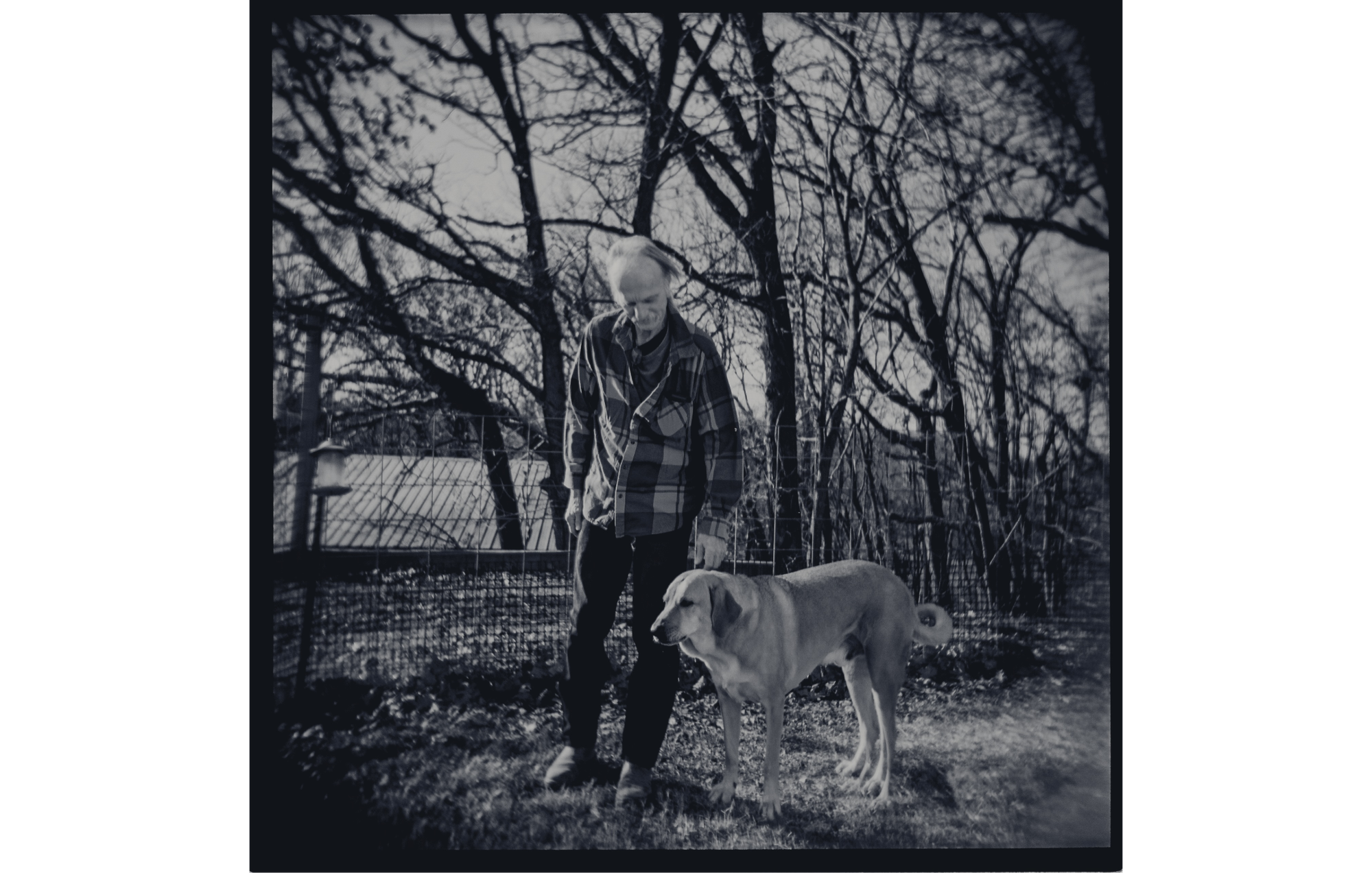
As Kurt tells me his story, and Red’s, his rheumy blue eyes look down the steep wooded hill. It’s not hard to understand why Kurt has mixed feelings about cyclists. Or why Red might have started chasing cyclists. Or why Benton County tried to have Red labeled a “vicious dog” after he bit a cyclist in August 2022. (The case against Red, Kurt is quick to note, was later dropped.)
Although Kurt says that he’s spoken with a few cyclists, asking them to stop and meet Red, and although Kurt is more patient than some of his neighbors (“I really can't repeat what some of them say”), you can hear in the way he talks that efforts to cross the divide have not fully landed.
He wonders why they can’t ride the bike trails that have been made for them. (“When I was a kid, I'd ride my bike on dirt roads, but we didn't have bike trails, you know?”). Or why they don’t move over for cars. (“They don't look behind. It's like, they know that they got the road, you know? Yeah, no common courtesy.”) Or why they seem to have an air of entitlement (“They just have an attitude like they own the road, I guess. And everybody I talk to seems to say the same thing.”).
One day in mid-October, I ride east from Bentonville to Pea Ridge.
A few years ago, this area had been beyond the frontier, beyond the development, a place still ragged around its edges. Even then, however, it was clear that this was the direction of expansion, and now I want to see what it looks like where the two worlds collide. I’ve come too late. The battle has already done and gone, the armies decamped, the spoils divvied. There are no fires smoldering. Just a strange, denuded landscape of high-end modern homes and golf courses. Sure, there is still an unpaved road here, so the place retains a whiff of the rural, but it’s the final vestige. If I am being honest with you, honest with myself, I did not see this coming. I thought it was too soon to be too late.
To their credit, in recent years the powers that be have made some top-down efforts to close the gap between the tights and the overalls. At the center of those efforts is the Runway Group, a holding company backed by grandsons of Walmart's founder, which has invested in everything from restaurants to the outdoors. In May 2023, Runway representatives formally pitched the local government on the idea of a “Respect Rural Roads” initiative that would, among other things, place seventy-odd signs on major cycling routes and fund radio spots to educate farmers about these new two-wheeled interlopers.
That August, the Benton County Farm Bureau released a video of a conversation between its secretary, Wes Evans—the source of that “tights and overalls” comment—and a well-known cycling advocate (who just happened to be employed by the Runway Group). The following month, more than two hundred cyclists were invited out to Evans’ farm for dinner and fellowship. A few months after that, nearly three hundred riders attended the Pea Ridge Ramble, where, over donuts and coffee, Pea Ridge’s mayor hosted a discussion about the future of cycling in his small town.
These were important, valiant efforts. But what does it say when there is only one person—one farmer, one mayor—ho represents the rural community? It's hard not to see this and wonder if the math doesn't work, if the equations are imbalanced.
A few months later, I will think about these outreach programs when I’m speaking with a Benton County farmer about the changes he’s seen and hear this:
“We’ve got hay cutters which are twelve foot wide, and you go down these dirt roads pulling that hay cutter. And you’ve got a $100,000 tractor and a $30,000 hay cutter, and you see a group of bicycles coming toward you. They don’t get over in single file. They want to stay two, three over, and we have to get in the ditch with our damned equipment or run over their ass.”
Nowadays, Red does not roam.
When he goes outside, it’s to a fenced-in area just outside the door of the shop, where he can be found lounging in the sunshine. Red hears the cyclists first. He sounds the alarm from the pen. Once, Kurt wouldn’t even hear the cyclists coming by, but since Red’s trouble, he hears them now, too.
Another day, I ride west into the hills around central Benton County. It's dry, dry enough that the dust has blown off these gravel roads. In places, you can see the road beneath, an angry, rutted surface with bumps and furrows. A rare, raw topography.
It is one of the prettiest days of the year, seventy degrees, mid-November. Leaves are changing in a big way. Those that have fallen sweep across the roads. Riding up a gently sloping hill on Washington County Road 861, I can hear the sound of someone shooting in their backyard. It is a high popping sound that cuts out when I look through a break in the trees lining the road. When I turn back to the road, just ahead, I see the haunches and tail of a large dog disappearing through a tunnel of grass. Then I see a man, facing away from me, standing in the middle of the road, raking leaves into the drainage ditch. He’s wearing a threadbare wife beater, a trucker hat, and ratty blue jeans—all of which I’m making a mental note of when, as the space between us narrows, he spins around and I realize he hasn’t heard me until now.
“Man, you scared the shit out of me,” he says. There is no humor in his voice. There’s nothing else that needs to be said. He doesn’t laugh, and I gasp a brief, breathless apology as I continue up the hill, feeling my otherness in a way that I seldom have before.
This story originally appeared in Issue No. 02 of Southlands.
This post is for paying subscribers only
Subscribe to get access to this and all premium content.