This story originally appeared in Issue No. 01 of Southlands. You can escape your screen and dive into a print version of the story by ordering a copy in our shop. And be sure to subscribe to receive the next two issues.
Austin may be a three-hour drive away, but you can feel the Gulf Coast here. It’s in the air, especially in the hot half of the year, in the muggy breezes that blow in from the southeast and give you the feeling Poseidon has been partying in Port Aransas and is about to come stumbling through. The connection is tangible, especially in the rivers that wind their way to our warm sea, the networks of petrochemical infrastructure that keep the human machine running, and the wild creatures that use both as pathways to navigate their way through the world we have made.
As a transplant from the Midwest, I found Texas a forbidding landscape to acclimate to. Not just because of the brutal heat, or the way every plant and animal seems designed to hurt you. Texas instinctively defies the Puritanical order most parts of the country impose through Pleasantville zoning codes and the culture of suburban cleanliness. It’s a place so suspicious of the idea of the commons that even sidewalks are scarce, where land use regulation has never really been valued other than as a tool to perpetuate segregation and enrich the powerful. Texans have an intense love of the land, but it’s coupled with an intense pride in their ability to extract boundless wealth from its swampy bayous and hardscrabble dry country, by whatever means work. The state constitution enshrines each citizen’s right to hunt, fish, and “harvest wildlife,” plus a peculiar variant of the rule of capture designed to maximize your right to suck the water and hydrocarbons out from under your neighbors.
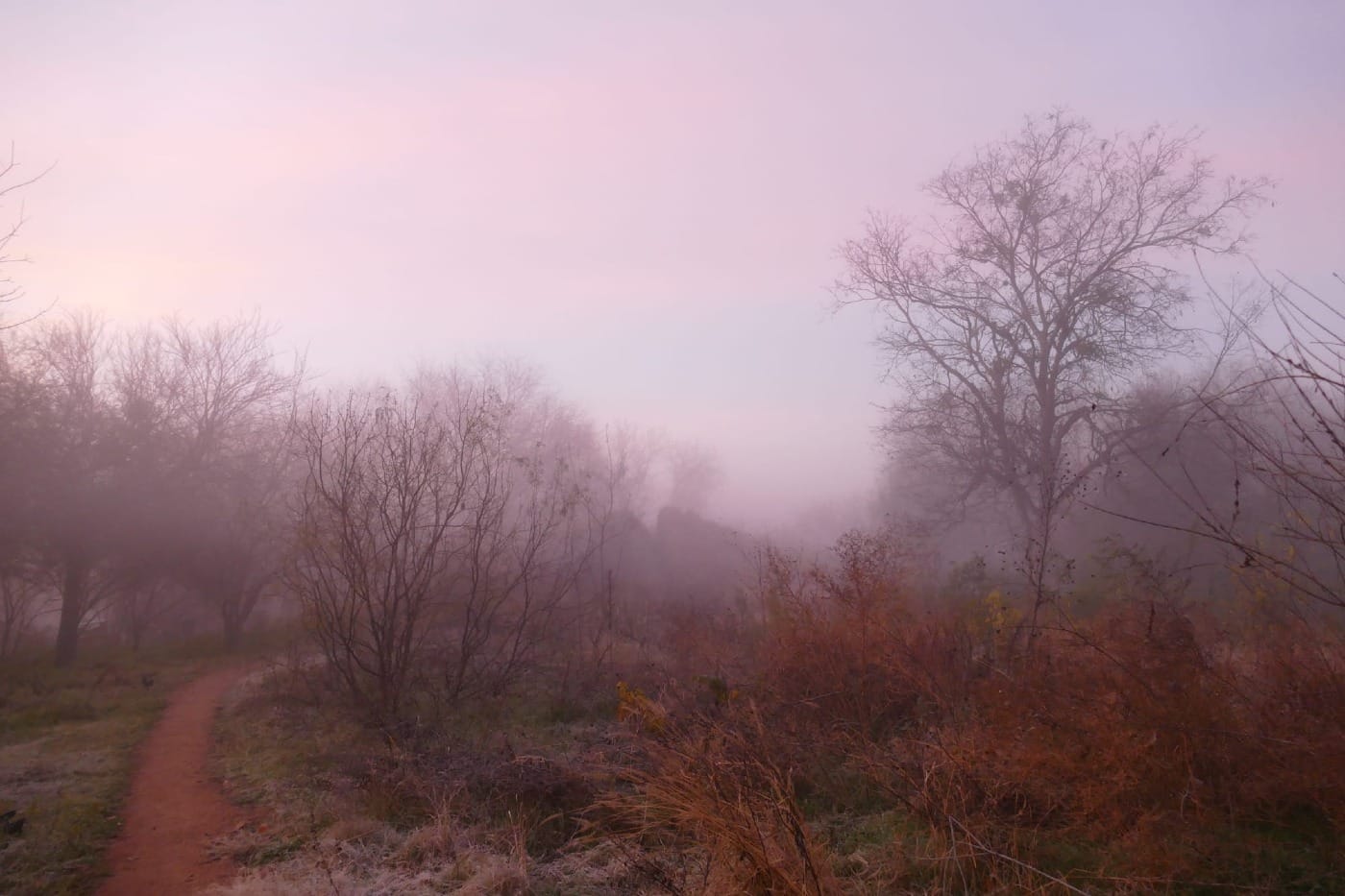
Take a drive around Houston, a city of flareoffs and frontage roads, outlaw landfills and toxic brownfields, and you might reasonably assume that you have arrived at nature’s end. But when you get out of the car, step off the pavement, or look up at the sky, you quickly learn that somehow this brutalized landscape remains vividly alive with biodiversity. Behind the fences, beneath the power lines, down in the floodplain, slivers of ruderal wilderness hold out in the margins of our dominion.
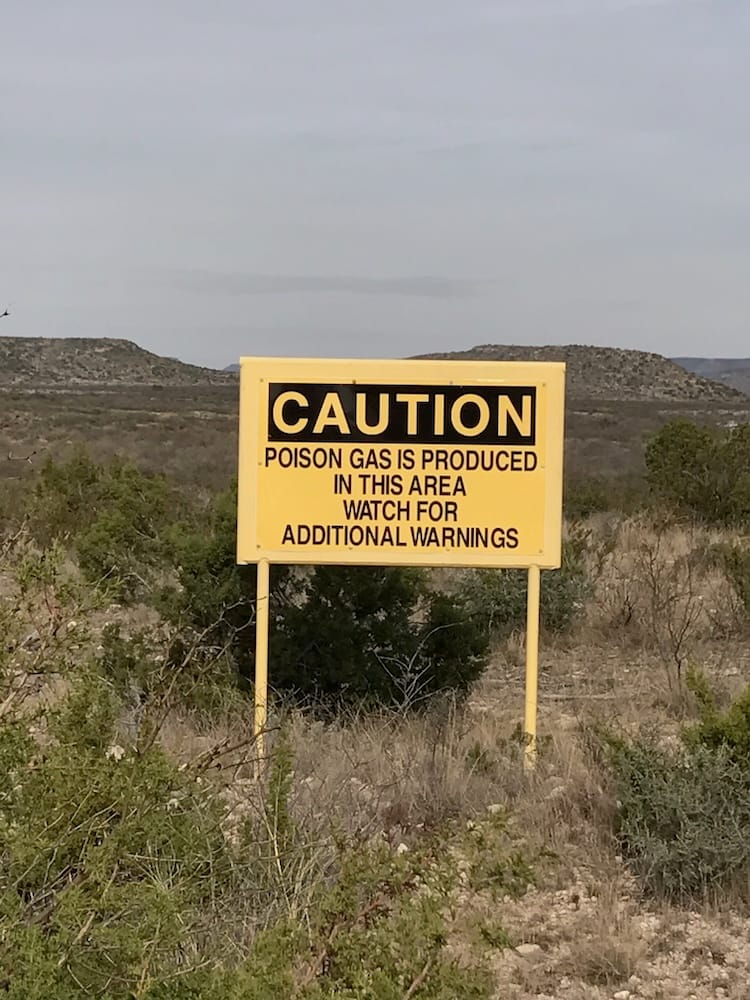
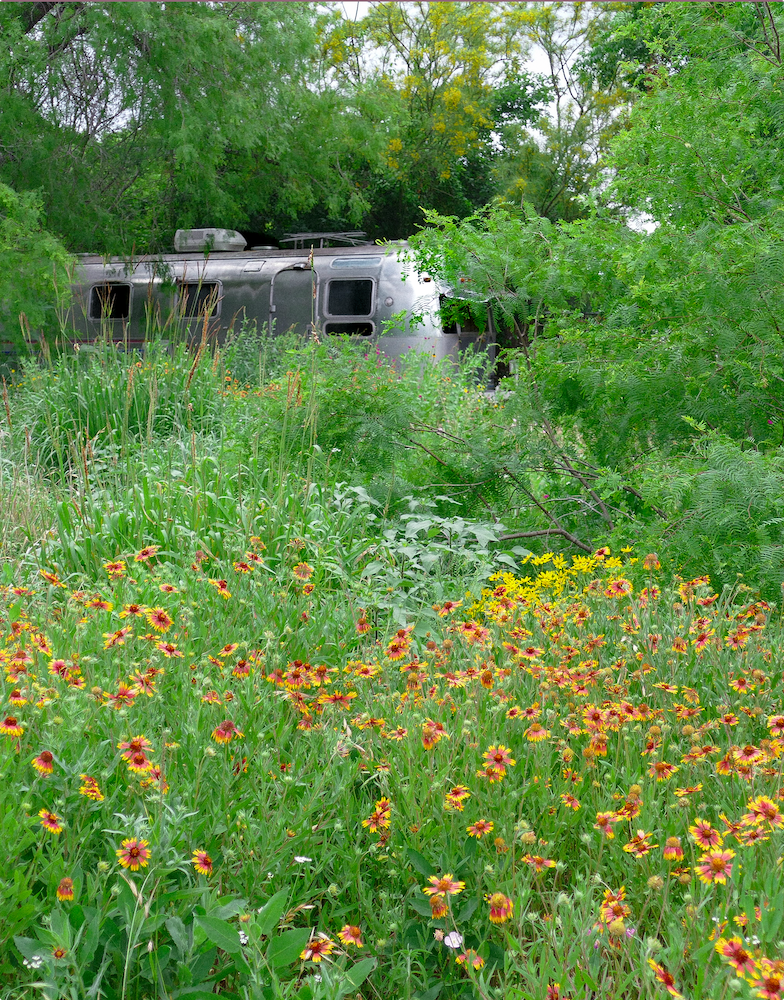
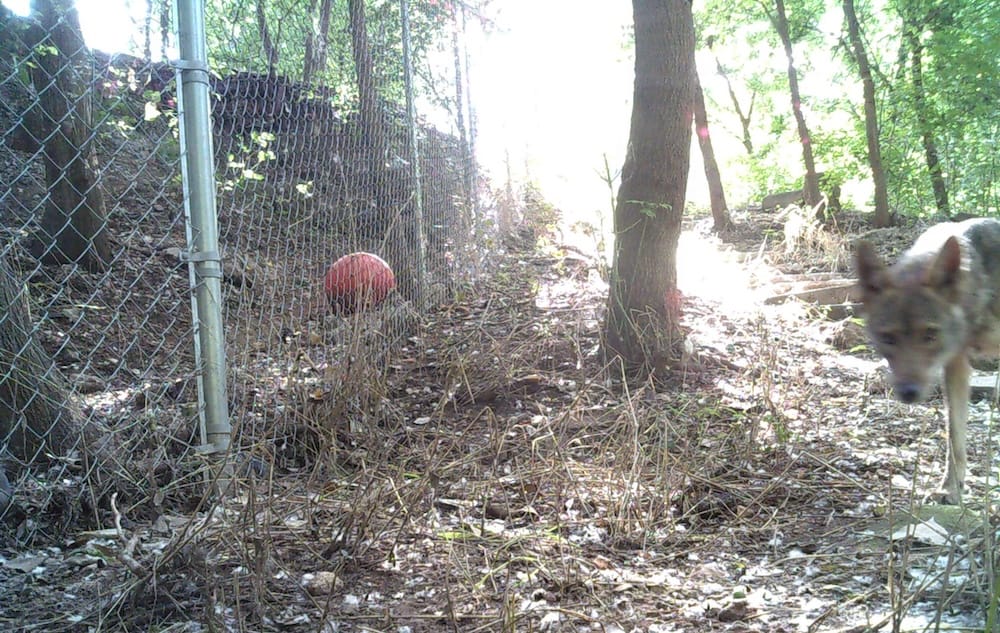
Over two decades living in and exploring these overheated edgelands, I’ve witnessed the paradoxical ways our most intense industrial land uses often provide vital interstitial habitat for wild animals and native plants. By creating zones of exclusion that keep other human activity out, they leave bits of urban negative space where other species can roam free from our gaze. These range from polluted sites to everyday empty lots in neighborhoods of little interest to developers, rights of way for infrastructure and industrial buffer zones, pocket forests, and the thin greenbelts of urban rivers and creeks. The habitat such places provide is fragmentary, dirty, often damaged. But it is wild—the kind of wild that comes when nature is allowed to reclaim land shaped by human use and abuse. And when you see how heavily it is used, you get to wondering whether it may be the only habitat left for many species. Or at least the only kind they were able to find in regions their kind have occupied for millennia.
The wading birds—herons, egrets, and, closer to the coast, ibises and spoonbills—are the easiest members of the post-industrial menagerie to see. They settle in to breed in the riparian branches that connect every corner of Texas to the Gulf, and their knack for doing so amidst Anthropocene ruin is remarkable. Here in Austin, they have colonized stretches of the urban Colorado River, nesting in the high branches of trees grown tall at the mouths of drainage pipes. There are six great blue heron nests down the street from us, in a sycamore behind the ruins of an old muffler shop where you could also get your taxes done, and every year the birds build a few more nests nearby, working their way toward the tollway. Come summer, the stretch by the new Tesla Gigafactory downriver is flush with green herons. In the suburbs west of DFW Airport, where the Trinity River delta branches its way through the North Texas plain, the cattle egrets turn the trees of suburban subdivisions into such expansive rookeries—and such ubiquitous menaces to the paint jobs of cars and trucks—that the local governments hand out instructions on how to haze the birds with air horns and Mylar scare balloons before there’s an egg in the nest and such harassment becomes a federal crime. In Houston, these living dinosaurs fish in concrete creeks and lumber through the air against a dystopian backdrop of refineries, freeways and tanker traffic on the Ship Channel, giving moments of atemporal grace to a society that does not deserve it.
This is a confluence of ecotones, where the plains and forests turn into the tropics, the land meets the sea and the South becomes the West. It never really freezes and every season is a growing season.
At night, the wild canids come out. When the sirens of the first responders hurtle down the thoroughfares, you sometimes hear the coyotes calling back from the woods behind the factories. The gray foxes are quieter, but less wary, making shelter from culverts and gabions, sneaking through gaps in the fences to hunt the rodents that live off our dumpsters. Walk in the urban woods at first light and you may stumble upon the horror show antler porn of a freshly killed whitetail while you hear the beeps of a truck backing up nearby. Behind the condos, strip malls, and docklands of Galveston, you can track ghost wolves—urbanized coyotes recently discovered to have interbred with the red wolf, a native of the South long thought to have disappeared in the wild.
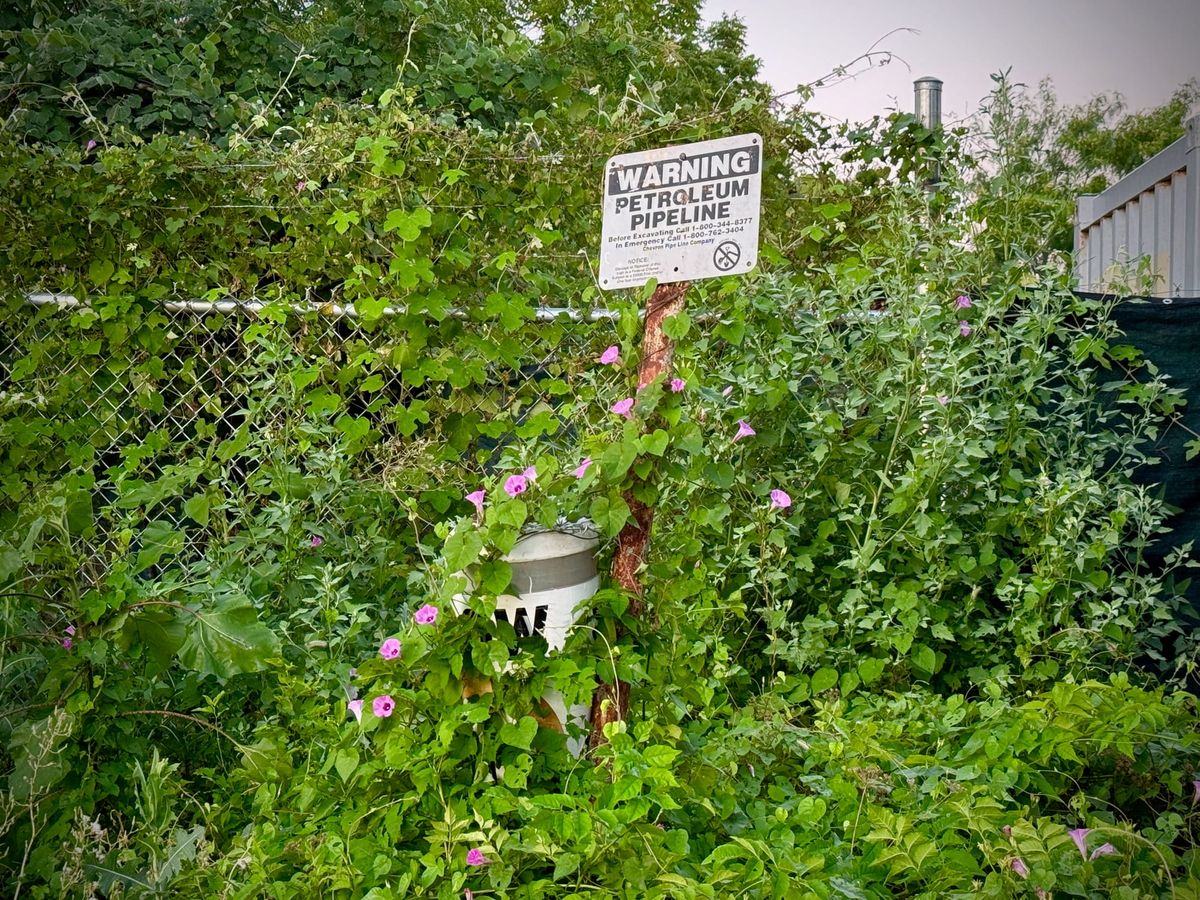
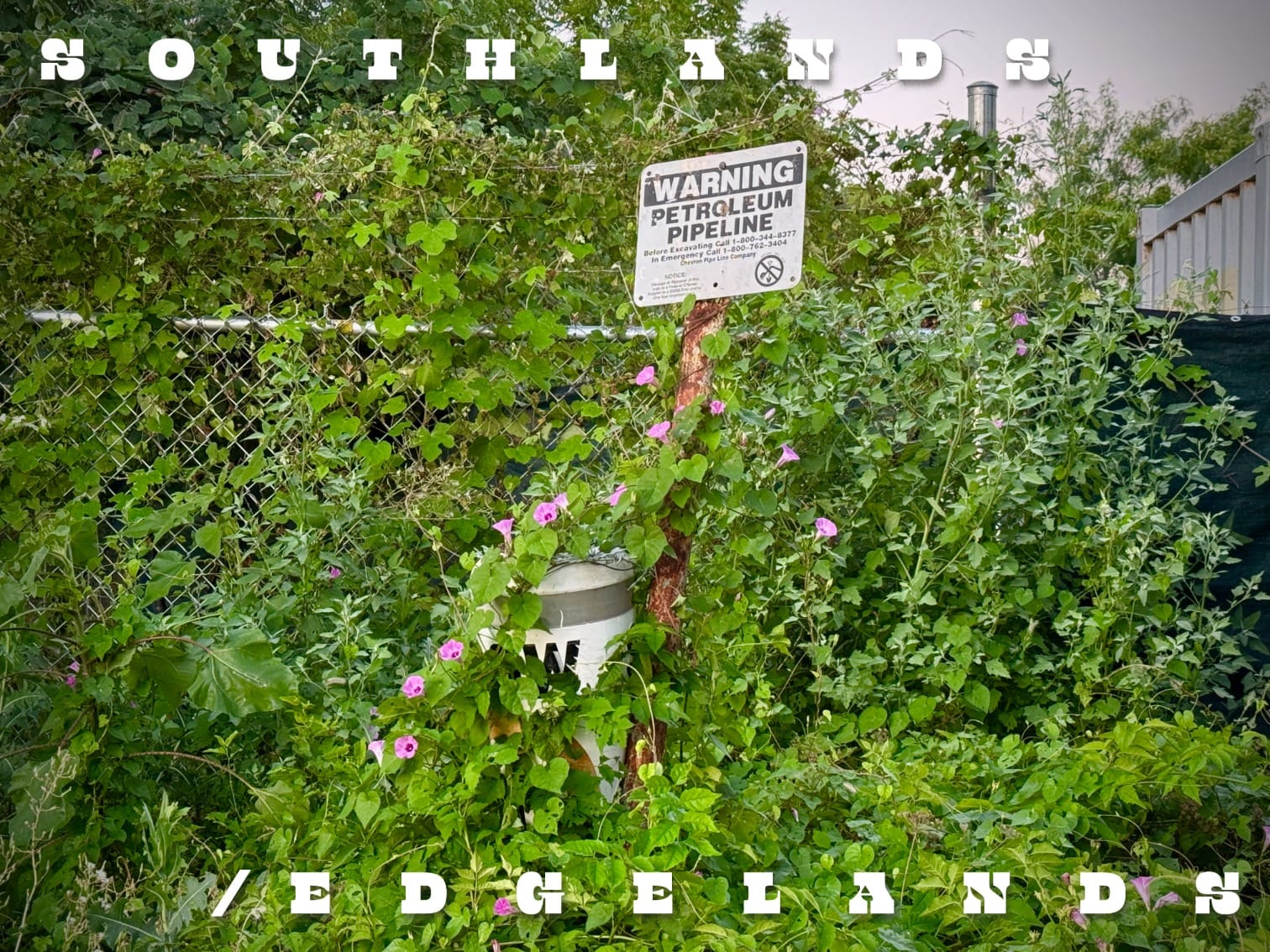
For the past fifteen years, my family has made our home in Austin on an urban acre sandwiched between a row of factories on one side and the wooded floodplain of the Colorado on the other. Living here, we’ve experienced the remarkable diversity of wildlife that makes its habitat in the marginal spaces we leave untended. It became especially evident after we began to restore the native plantscape on what was an outlaw landfill bisected by a petroleum pipeline. We’ve seen everything from elusive natives like ringtails, an animal I had never even heard of until I saw one, to naturalized species like the monk parakeets that build multifamily nests in cell phone towers. Perhaps our most common raptor is the black vulture—the bird Audubon observed as one of the earliest adaptors to the new cities of the South, especially around the slaughterhouses of New Orleans and Charleston—but these forests are also thick with red-shouldered hawks, river-patrolling ospreys, peregrines, barred owls, kestrels in winter and Mississippi kites in the summer. We see kingfishers and painted buntings, crested caracaras and color-changing waxwings, power pole whistling ducks whose hatchlings parade across loading docks, coral snakes and cottonmouths, trophy bucks foraging under the Google Fiber lines, and bobcats that sneak around behind the dairy plant. The armadillos are everywhere, digging grubs from the dirty floodplain, as are the raccoons that clamber over the chain-link looking for turtle eggs cached far from the water. Lately, we’ve been hearing rumors of jaguarundi nearby—though for now you’re more likely to see a robot Jaguar, one of the self-driving taxis that hides on quiet side streets waiting for its next fare like a big cat waiting for its next kill.
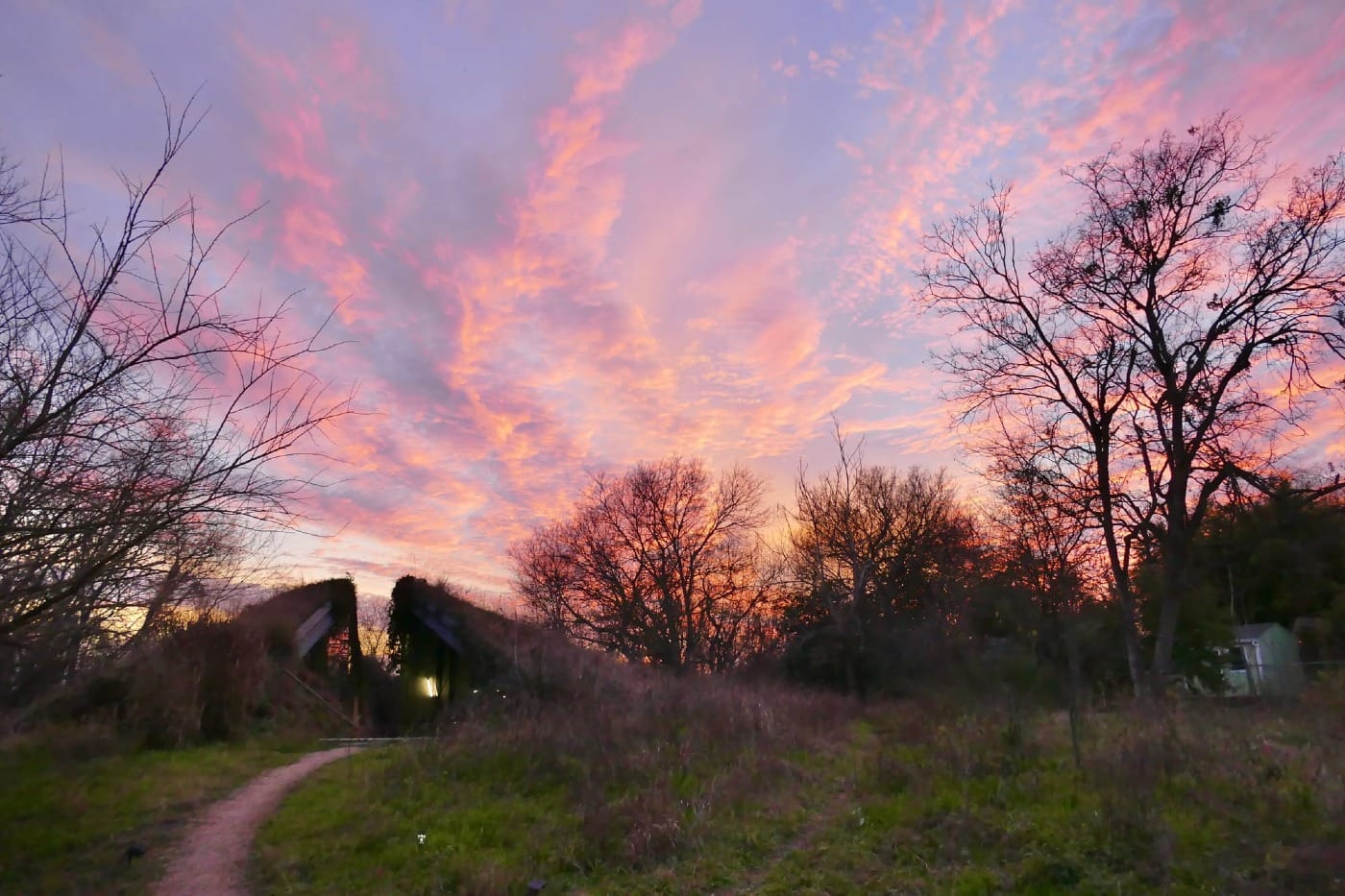
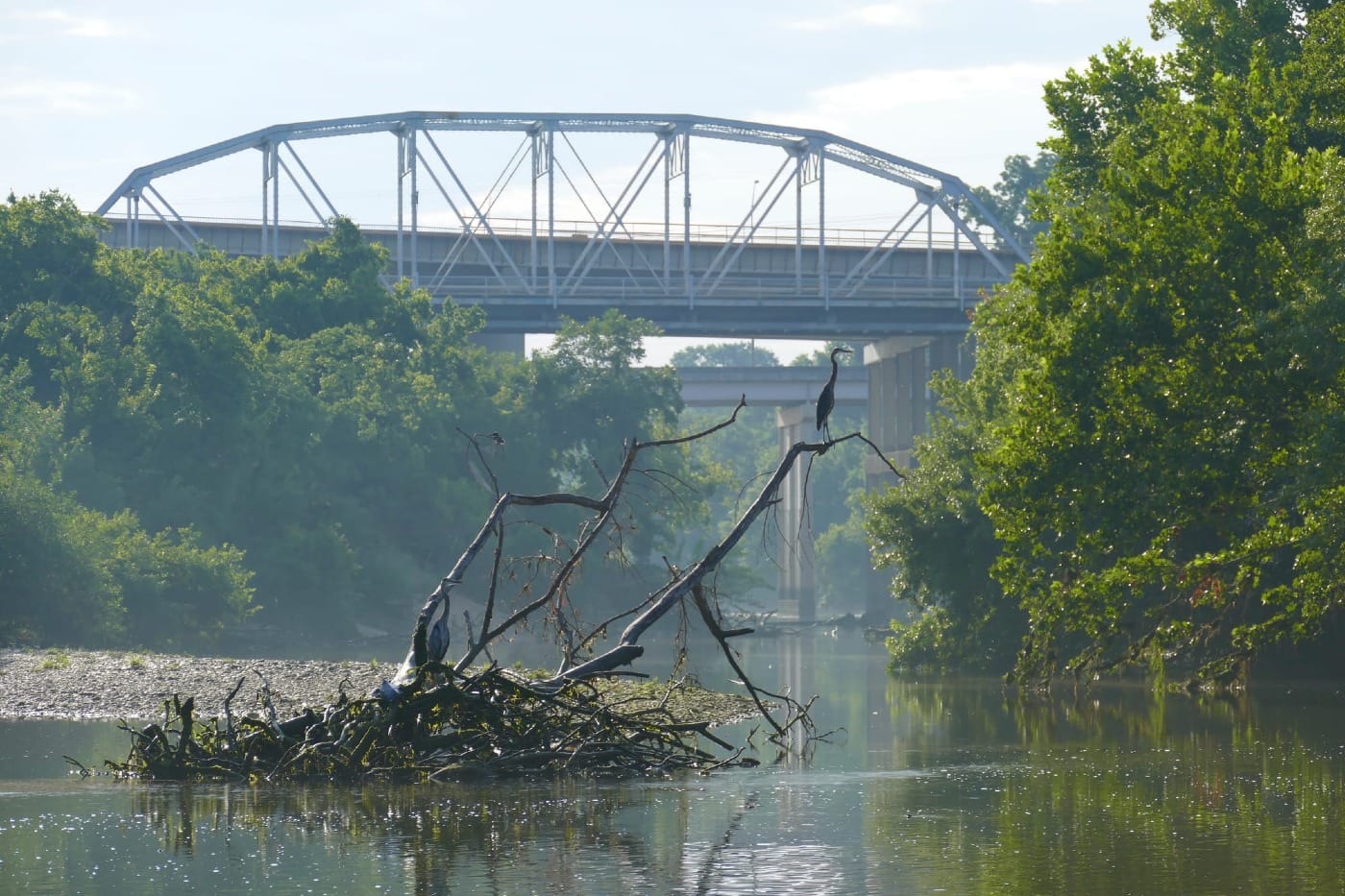
These animal adaptations to our engineered environment are not unique to Texas and the Gulf Coast, but they seem more intensely manifested here. This is a confluence of ecotones, where the plains and forests turn into the tropics, the land meets the sea and the South becomes the West. It never really freezes and every season is a growing season. It’s a major migration path, and while the megafauna that once roamed the landscape no longer track the I-35 corridor, the birds, butterflies, and bats still do. Production agriculture never really dominated here the way it did in regions with richer soils, mitigating the ecological erasure. And there’s something about the “come and take it” landscape of extraction that brings the resilience evidenced by such remarkable adaptation into sharper relief.
There’s something different in the people, too, especially those who work and play outside. The counterintuitive coexistence of industrial infrastructure and wild flora and fauna mirrors the way most Texans don’t fully buy in to the division between human space and wild nature that modern society programs into us. In part that’s because, in a place where it never really gets cold, the difference between inside and outside that’s so essential to survival in the North isn’t as big a deal. I think it also reflects the way people down here learn to live less alienated from their own nature. It’s there in the six-dollar ball cap I picked up one afternoon at a Johnson City gas station, emblazoned with a redneck aphorism of liberty that is also an evolutionary truth: born to hunt, forced to work. The lost world of the savannas we came from feels closer here, holding on in the rods and reels always ready in the bed, the kids who buy their first cars with cash they make clearing hogs off golf courses, the guys who spend their first chunk of hard-earned fuck-you money on a deer lease instead of a mutual fund.
The counterintuitive coexistence of industrial infrastructure and wild flora and fauna mirrors the way most Texans don’t fully buy in to the division between human space and wild nature that modern society programs into us.
Frederick Law Olmsted saw it during his 1854 saddle trip through Texas. Mailing home color commentary on the weirdos of the South for curious New York Times readers, right before he became America’s original landscape architect, Olmsted described a place with lush ferality—the people as well as the land. In one telling scene, seeking shelter from a storm as they passed from Nacogdoches into the plains, Olmsted and his brother knocked on a cabin door to be welcomed by a young couple who explained their uniquely Texan and primitively simple attitudes about the idea of labor and its connection to nature. The children of migrants who happily took homesteader land grants and made farms from wilderness, the couple had shunned the work and responsibility that involved, and instead became pastoralists who bragged to their guests how they only worked a month a year, when they and their neighbors would collaborate to herd and rope each other’s cattle, devoting the rest of their lives to outdoor play.
Olmsted—a proto-preppie who would soon become the creator of Central Park, that paradigmatic American simulation of nature amid the temples of capital—was unsurprisingly baffled, and a little bit horrified.
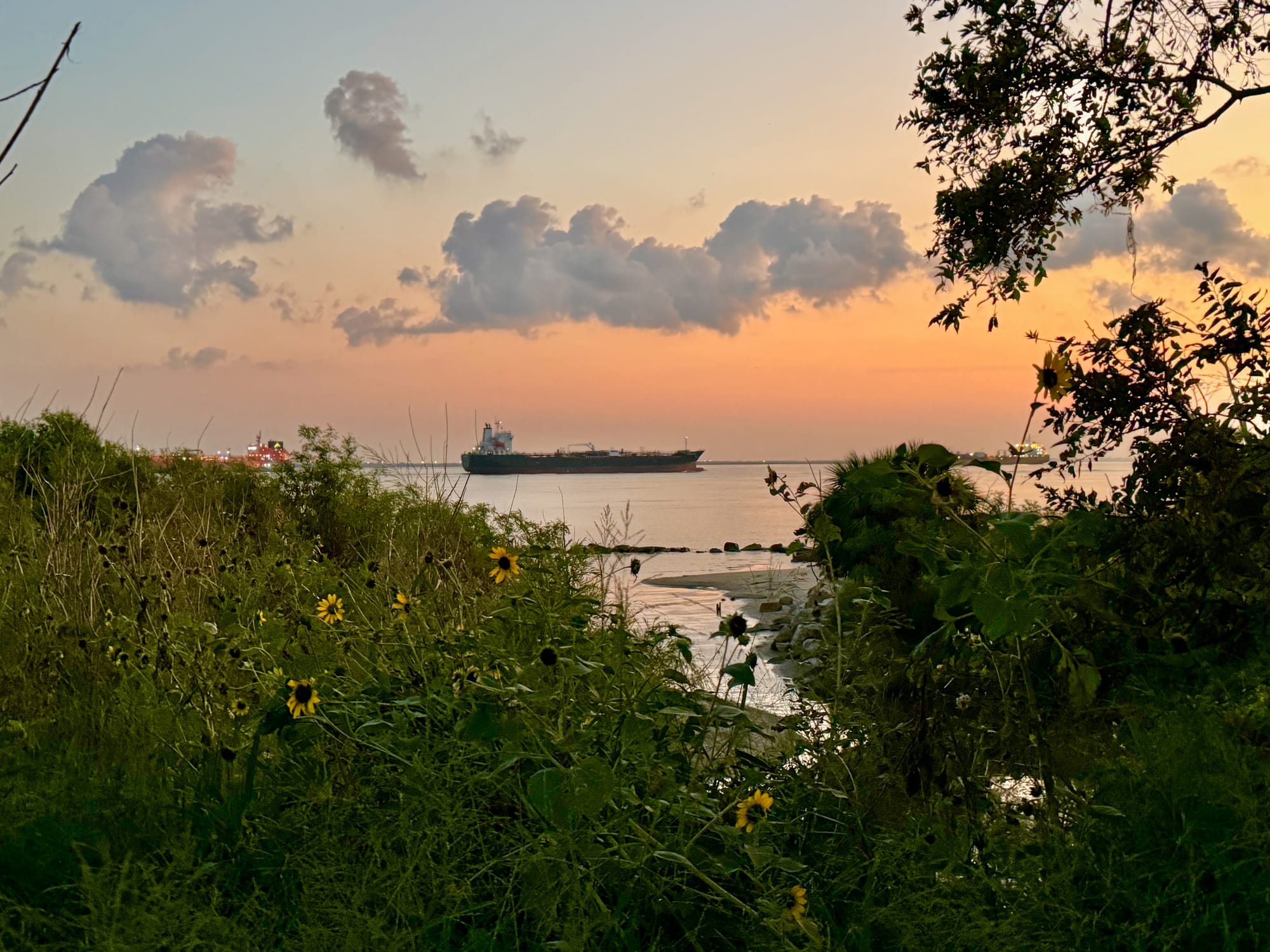
It’s hard to imagine what Olmsted would think if we drove him through the brutalized landscape that ethos has left us today, from the Promethean pipeworks and tank farms of the petrochemical Gulf to the monolithic data centers beginning to eat up the last pockets of exurban grassland (and all the power and water they can get). Maybe if he came in springtime, when the same wildflowers he saw in the boundless prairies of 1854 appear along the roadsides and fragments of undeveloped land, trying to spread their seed before the first mow, he might recognize it.
The persistence of our native plants is a reminder of how recently it was that the biodiverse ecosystems they anchored were brought under pavement and plow, and how ready nature is to recover if we leave it a little space to do its thing. We tend to miss the connection between the destruction of those ecosystems and the erosion of our own freedom, as our human habitat evolved into a machine designed to indenture us to the extraction from our environment of more surplus than we can ever consume, be it grain in the silos, crude in the barrels, or digital tokens stacked up in those windowless data centers. The shimmering coyotes that sneak around the side roads at first light and the spectral egrets that fly over the endless lanes of rush hour traffic are wondrous by their very presence. They are also glimpses of the world that could be. As the heavy weather the oil business helped cook up works to turn the Gulf Coast into one giant uninsurable zone, the rewilding may happen faster than we think. If we’re lucky, it may even rewild us.
This story originally appeared in Issue No. 1 of Southlands.