
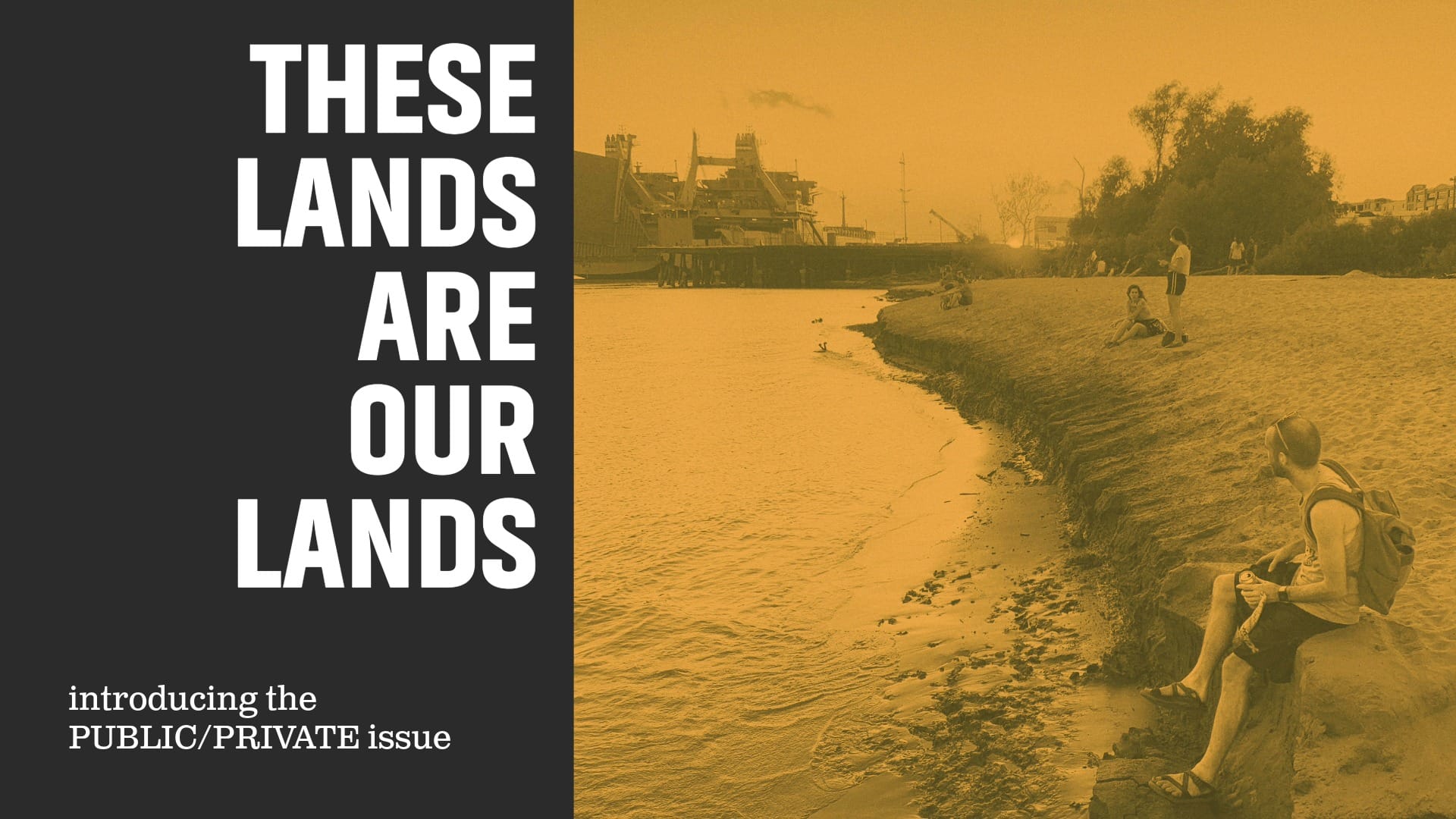
Our second issue, PUBLIC/PRIVATE, will be shipping soon. Over the coming weeks, we'll be publishing new stories from the issue each Thursday. We begin with this introductory editor's letter. Not every story will become available to read for free, so if you'd like to access the full issue, you can buy a copy in our shop or subscribe.
America’s public lands are, as the Alabama-born outdoor journalist Hal Herring puts it, “the essence of freedom.” They ensure that no matter who you are, you’ve got mountains to climb, blackwater swamps to paddle, rivers to run, and forests where you can chase deer or turkey or squirrels or simply the instinct to get away for a while, walk through the trees, and lay a bedroll out under the stars.
I’d add just one note to that: public lands are the best kind of American freedom, a contradictory liberty that is bound up with community. These lands are not yours but ours. As a country, we’ve decided to reserve some places as sacrosanct. We’ve declared that part of the landscape belongs to no one and therefore everyone.
We’ve devoted our second issue to the theme of PUBLIC/PRIVATE because that essential freedom is now under threat. The Trump administration, alongside a band of like-minded legislators, has moved to drill our public lands, log them, mine them, sell them, and gut the agencies that protect them.
If you follow these issues — and I hope you do, because our public lands need every supporter they can find these days — you may notice that many of these battles are happening far from the South. And that’s because we have relatively little public land here.
The short version of why: at first, the United States’ official policy was to sell off all its holdings so it could build a tidy nation of landowners, and so the government could get itself a bit of needed cash. A century after the Revolutionary War, when this policy changed as the first national park was born, most of the South had already been sold.
The stories in our second issue, which we'll be sharing over the coming months and weeks, explore what it means that so much land in the South is privately owned. That will include a deep look at one of the first wilderness areas east of the Mississippi River, where a legendary conservationist is adamant that here where wilderness is so rare, it’s the wildness itself that matters — not whether we can easily visit. We’ll share an excerpt from Andrew Kornylak’s book Spare These Stones that tells the story of Southern climbers who have worked together to ensure their sport can persist in this strange political landscape. And, oh yeah, you'll meet Ozarkian “yarddogs” — those pesky beasts that chase cyclists on backroads, and might just offer a metaphor for how an influx of money reshapes our towns and communities.
It’s worth noting that the land in the South was sold not just to prototypical American farmers. Huge swaths went to timber companies, which, at the dawn of the twentieth century, operated with a rapacious greed that felt like a darkness seeping over the land, as Worth Parker notes in his feature in the issue. The companies’ clear-cutting left behind “the lands nobody wanted,” in the words of one historian. Scorched stumps and mangy brush not good for much.
But these lands, amazingly, became some of our grandest tracts of federal public land in the South — our national forests. You'll get a longer version of that history when you read Worth’s profile of Hal Herring, which explores how his Southern roots inform his work as one of the foremost experts on, and defenders of, public land. Herring is an inspiration, but that history of clearcuts and regeneration inspires me too. It’s a reminder that even amid the darkness, the seeds of something beautiful might be down there in the ashes. That’s a story I hold close these days.