

This essay originally appeared in Issue No. 02 of Southlands. You can escape your screen and dive into a print version of the story by ordering a copy in our shop. And be sure to subscribe to receive Issues Nos. 03 & 04.
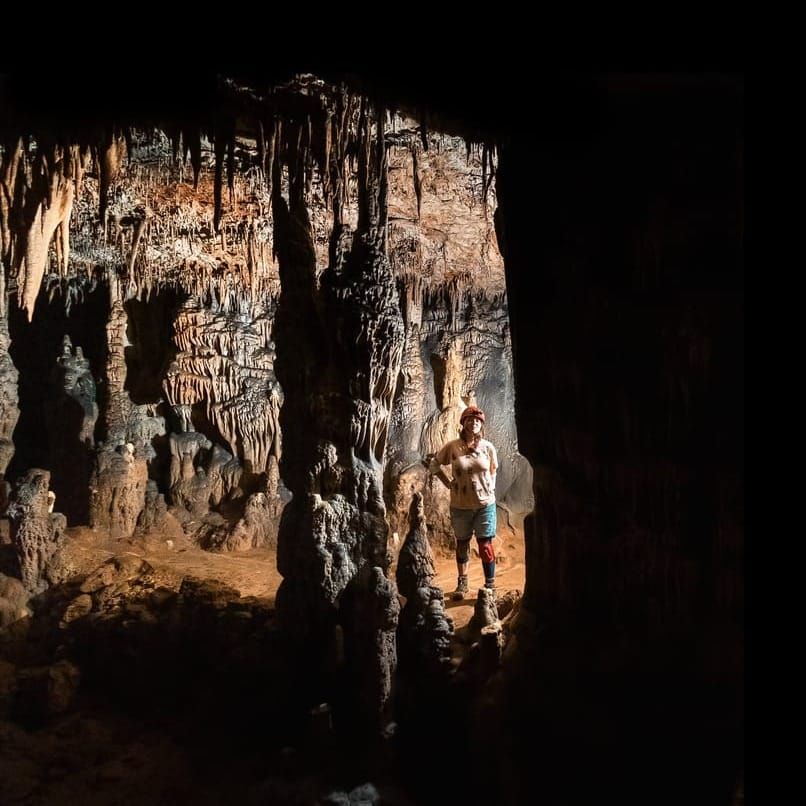
In a holler in Newton County, Arkansas, there is a cave whose walls rise up in great spiraling curtains of stone, climbing toward darkness with the kind of audacity that makes an explorer feel both insignificant and strangely chosen. Mexican free-tailed bats wheel through the chamber like tiny drunken fighter pilots, their wings drumming out a rhythm older than memory against passages so tight they seem to breathe. A river moves through the belly of the cave with the patience of something that has never been in a hurry.
I own this cave. I bought this land with my partner more than a decade ago, before he passed away. We shared a love of exploring dark passages, of crawling into holes just to see what we could find. We had been borrowing the underworld for years, slipping into other people’s darkness like thieves of wonder. If we wanted to keep chasing that old magic, we needed a cave of our own.
Arkansas had already claimed us anyway. We drove from Oklahoma a couple times a month, pilgrims coming to hike those rolling green ridges, to float the Buffalo when she ran deep and slow, and to crawl into any hole in the ground that would have us.
So when twelve acres hit the market — featuring a ramshackle house and a cave that opened into the hillside like a door — we didn’t hesitate. We didn’t even pretend to think it over.
We bought the land when the government had just begun to shut down access to caves across the Southeast. Something called white-nose syndrome was killing millions of bats, and federal agencies closed cave after cave.
This post is for paying subscribers only
Subscribe now and have access to all our stories, enjoy exclusive content and stay up to date with constant updates.
This post is for paying subscribers only
Subscribe to get access to this and all premium content.