
All swamps stink. This one stank too. Like sunscreen. Like the captain's cigarettes and the little baitfish they call pogies. Like shorebird shit and mud and catfish slime that clings to a fishing line with the grip of snot from a three-day cold.
But, more than most, this swamp stinks like money. Money that buys gleaming white boats to skim along the inshore channels and inlets. Money that buys the motors that power them—four 400s are the standard here in Tuna Town, 1600 horsepower, lined up like the carriage horses of today's new aristocracy to carry the wealthy to the hunting grounds. Money that pays for the gas to fill the four 400s and send them roaring past the inshore storage tanks and the offshore rigs that bring in much of the money in the first place.
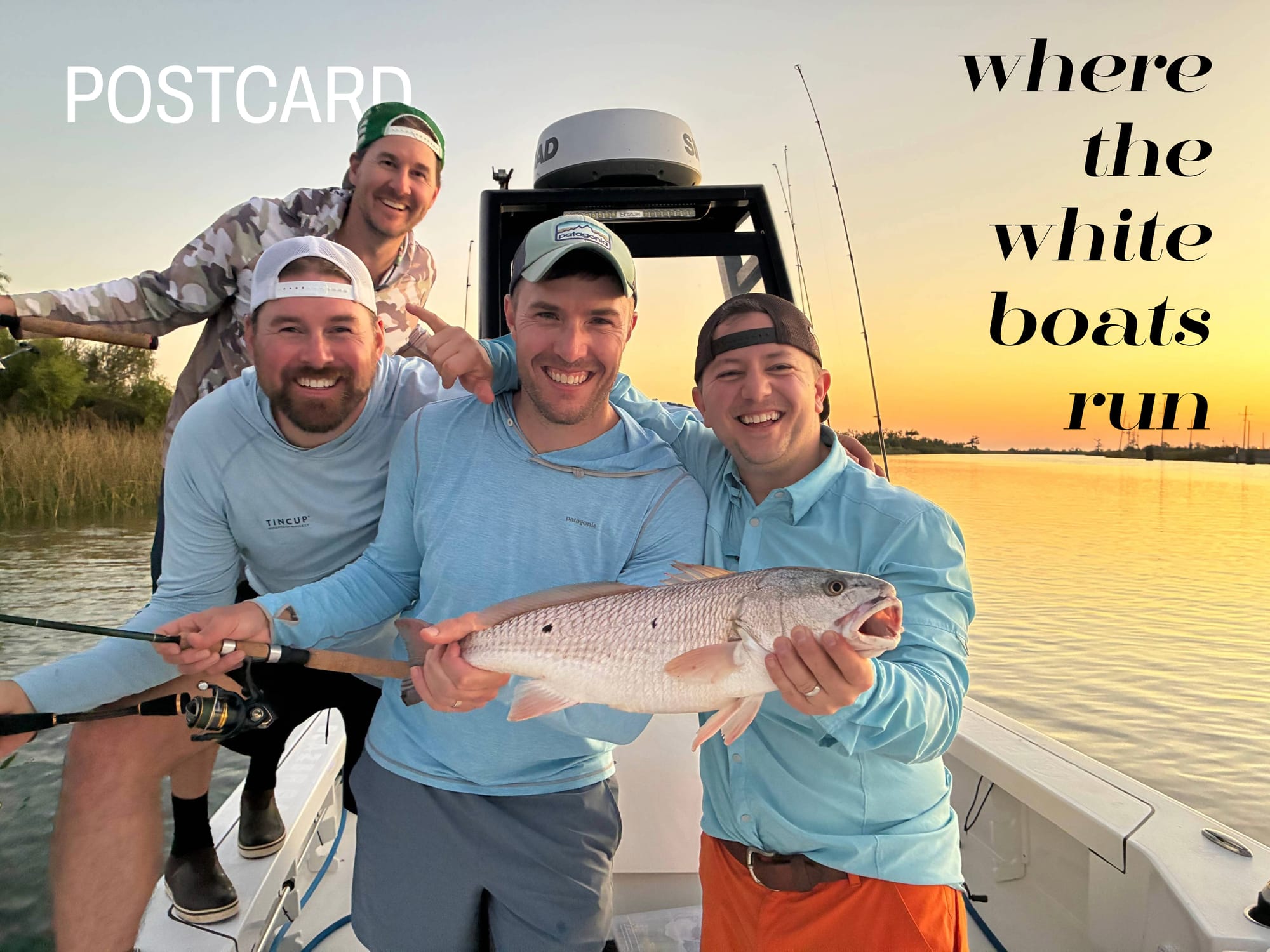
I don't have oil money and neither do my friends, but we at least have gas money, so long as we split the bill. We still talk and still fish together after all these years, and why not spend the money we do have chasing fish we know nothing about in this swamp filled with white boats and their four 400s at the very end of the road in Venice, Louisiana. Why not point like tourists at the oil rigs many hundreds of feet high, where roughnecks dangle over the churning seas, or at the burning fires of the gas stacks flaring off methane all hours of the day and night, or at the actual fucking flamingoes soaring overhead, fanning out their wings and cupping into the backwaters just like the mallards do back home. It’s the same fishing rods, at least, and the fish are fish and fish hooks are fish hooks and Nate is still an optimist even when the wind is wrong and the water is too rough or too smooth.
This trip, we watched more radar than water. Small craft warnings became high seas, and rain filled the bourbon glasses left on the deck the night before. Our plan for a fan boat adventure became four o'clock beers and retold stories and talk of the tomorrow, because tomorrow can't possibly be as bad as today, and though we were wrong about that yesterday, something had to change.
The next day was calm, calm enough for us to finally burn gas and wet lines, but the water was still silty and the luck was still bad, and we sent cast after cast into the bull rushes and cursed when they snagged and reeled in sulky silence when they didn’t. We should have given up then. Let it go and tried again next year. Banked the boat gas money and enjoyed a quiet early dinner and a good night's rest before flights home. We thought about it as the sixteen-year-old in sweats filled up the tank of our rented boat and the numbers rolled over, gallon after gallon, dollar after dollar. But we always knew we were going back out.
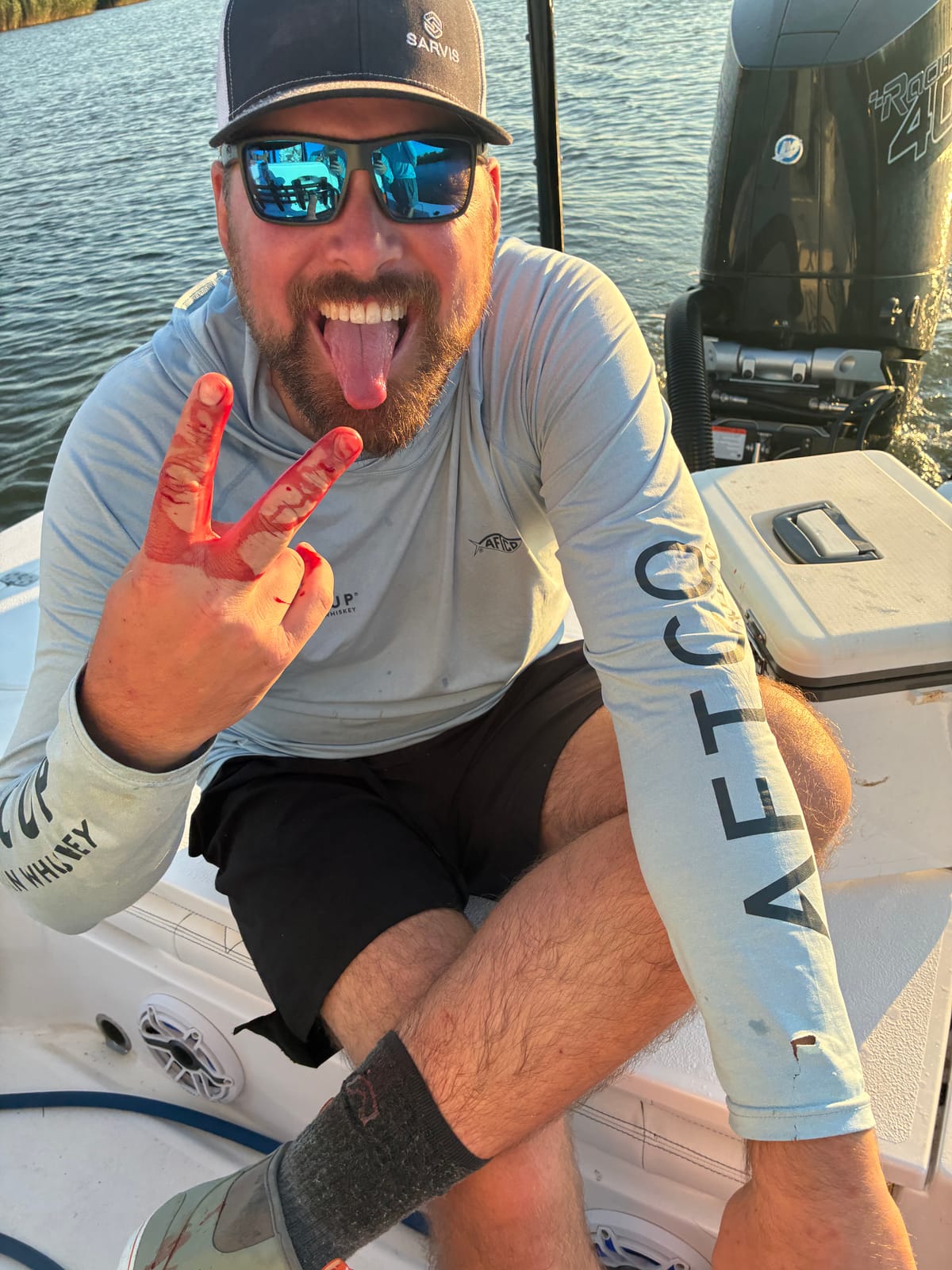
That first sip of the first beer after the first rod tip bent over validated everything and nothing at all. One nice fish in the box was enough to make us laugh again and clap each other on the backs and never doubt our choices to always spin the wheel and point the bow out towards the good water where the big fish wait. Or the medium fish, or even the little fish, like the catfish that stabbed Tyler in the leg and stained the white deck red.
We were ready to take him in, of course, get the wound cleaned and the boat cleaned, too. But he was laughing and we couldn’t help but laugh too and his sock seemed to be slowing the bleeding and, well, the fish were biting and after all those days of casting and reeling and waiting and watching the rain blow sideways—maybe we could turn the boat back into that little creek mouth. And so he grinned and throttled forward and was the first to cast after hobbling to the gunwales of the rich guy's boat we would have to return tomorrow.
Sam Jefferies has written one book, the true story of the American South's only homegrown hockey hero, and won no awards. He appreciates a good pair of suspenders.