

Our second issue, PUBLIC/PRIVATE is now shipping! Over the coming weeks, we'll be publishing new stories from the issue on Thursdays. Not every story will become available to read for free, so if you'd like to access the full issue, you can buy a copy in our shop or subscribe.
In the last of the six hundred miles I’d driven to meet Hal Herring—a man I’d long admired but never met in person—I found myself hoping for the best while preparing for the worst. Grinding my way up a rutted gravel road I hoped was his, my headlights revealed little but light rain falling on winter’s naked trees. My teenage daughter would have said the place was “giving ‘No Trespassing.’”
That I’d been listening to the Drive-By Truckers since I entered North Alabama likely didn’t help. But the facts remained: I was hours late; the blue dot on my phone had entered a roadless blur after I’d left the pavement; and, without a cell signal, there was no calling Herring for directions. Here in the South, we believe in private property, and I just hoped this road didn’t lead to the wrong end of a shotgun.
Feeling like a pilot looking for somewhere to land a sputtering plane and suddenly seeing runway lights, I rounded a curve to find the promised collection of log cabins, built just as the area’s Cherokee were forced westward at bayonet point. In the light of an open door stood Hal Herring, hickory-hard and pine-straight, enthusiastically welcoming me in an accent evoking weathered sandstone cliffs and rolling hills. Ushered inside, I warmed myself by the same fireplace where a teenage Herring cooked the first deer he killed. He fed me soup he’d made from a Thanksgiving turkey carcass found in the freezer, and, after hours of conversation cementing our formerly virtual friendship, showed me to his own childhood bedroom, where I slept soundly under the weight of old quilts and the gravity of a place built 150 years before I was born.
The next morning, both of us sipping black coffee, we walked outside into the cool bite of winter, mist lying heavy amongst the trees. Herring gestured toward the tailgate of my truck.
“That’s a cool sticker.”
“Half Hearted Fanatic,” it says—a phrase of Edward Abbey’s, from a speech in which the Western writer, environmentalist, and anarchist counsels us to beware of burnout in defense of the land. Instead, he says, be “a reluctant enthusiast,” “a part-time crusader, a half-hearted fanatic.” Save “the other half of yourselves and your lives for pleasure and adventure”:
It is not enough to fight for the land; it is even more important to enjoy it... So get out there and hunt and fish and mess around with your friends, ramble out yonder and explore the forests, climb the mountains, bag the peaks, run the rivers, breathe deep of that yet sweet and lucid air, sit quietly for a while and contemplate the precious stillness, the lovely, mysterious, and awesome space.
I made the sticker and have handed out a pile to like-minded friends, but the only other person who recognized its source was my wife. From Herring, a man for whom Abbey could have written the charge, this felt like validation.
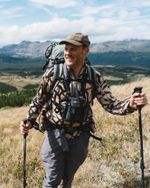
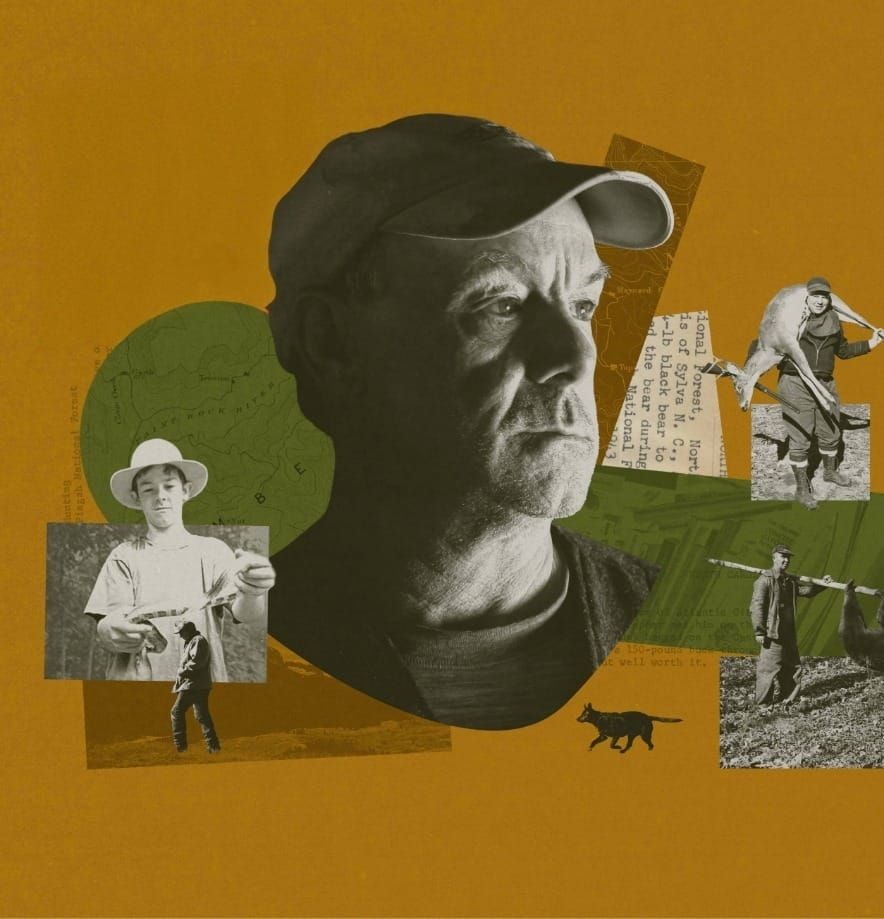
I am a half-hearted fanatic because life as a 53-year-old suburban North Carolina dad and husband demands it. Herring, by contrast, lives Abbey’s admonition by design. An award-winning journalist, a prolific podcast host, he is the bannerman for a movement committed to protecting our public lands—the essence of our American freedoms, in his view (and mine)—against continual assault by politicians, developers, and extractive industries. Herring is, every day, either fighting for the land or celebrating life upon it. Advocating for the land and hunting and fishing—messing around with his friends—are not his lifestyle, but his life.
But, standing on that hilltop under the cold-stripped branches of the Herring family’s forested homestead, in a region where some 90 percent of the landscape is in private hands, conversing in Southern accents about a shared passion for America’s public lands—95 percent of which are found outside of the South—I couldn’t help but consider Abbey’s words an allegory for the many complexities of what it means to be a Southerner. He counsels us to fight for the land and to revel in it—but what of those of us who stayed in a place where so little remains open to the public for reveling?
Herring found his answer when he left the region; he’s lived in Montana for almost thirty years. I’d come to meet the man, in part, to find out if he has any answers for those of us who haven’t left.
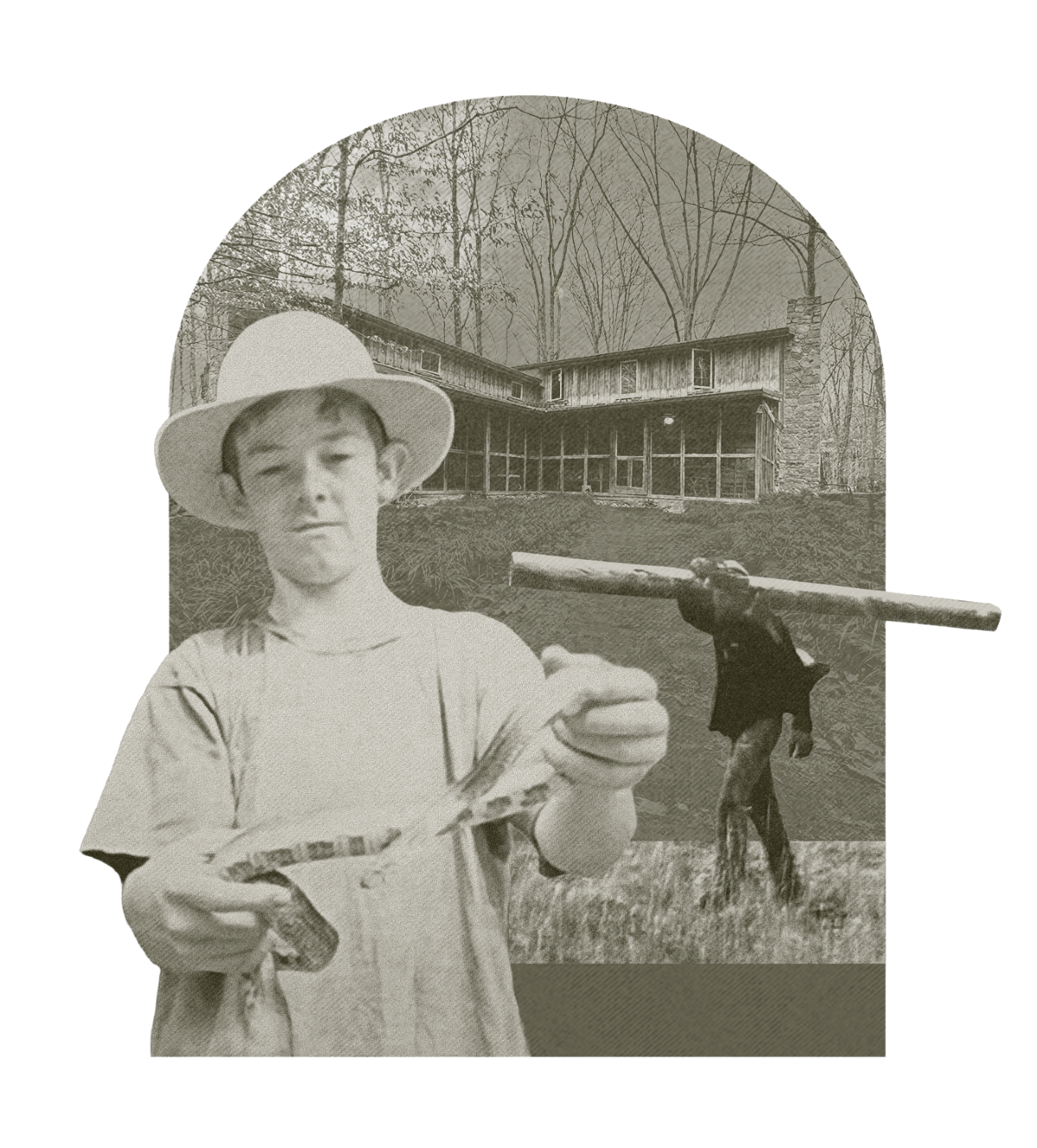
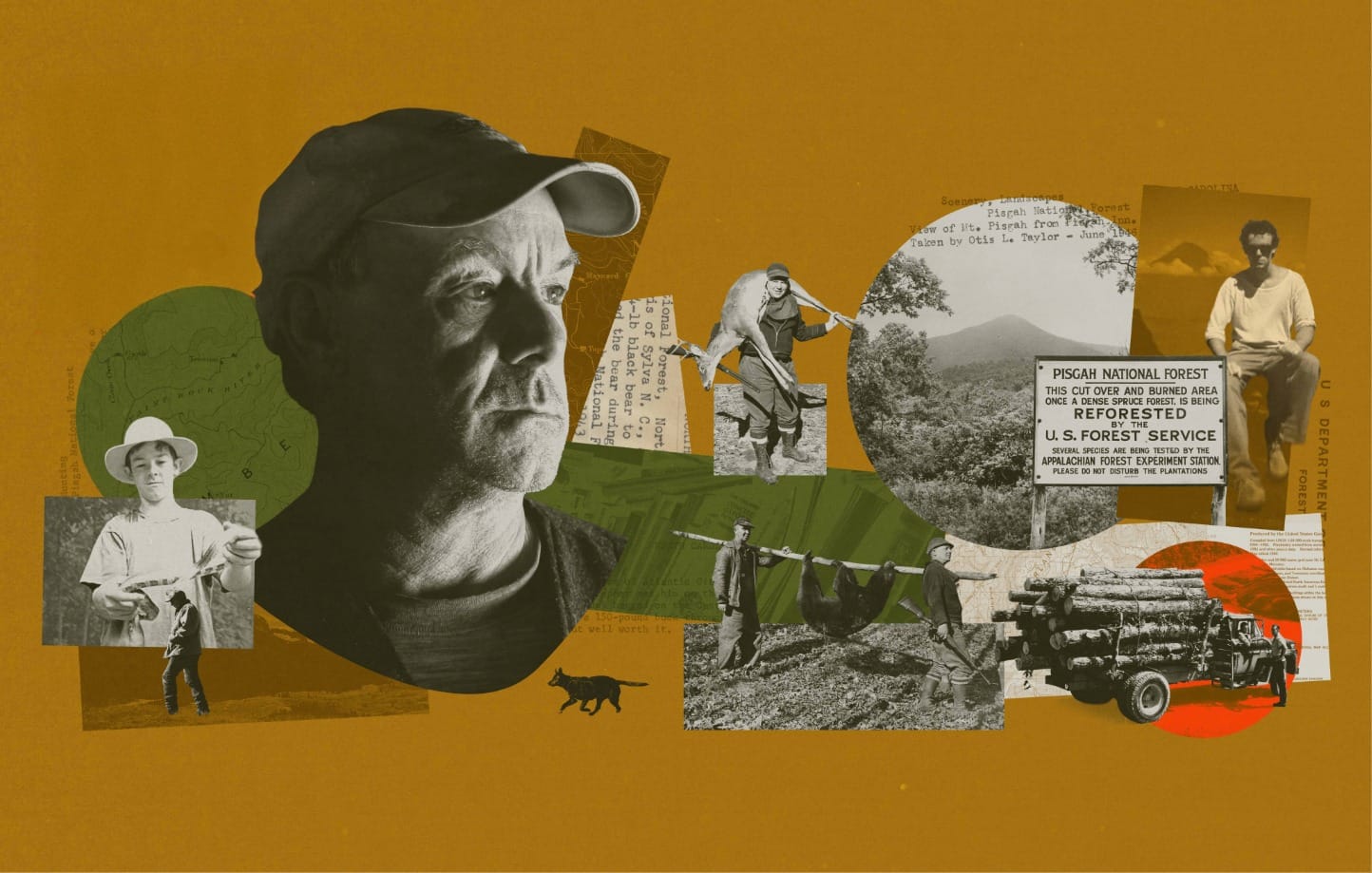
Herring was born in Huntsville, Alabama, to a lawyer father and a homemaker mother, who spent much of their lives unhappily “watching all those woods come down and watching those creeks become channelized during the baby boom,” Herring tells me. “So when my father had some success, eventually, we found this place.”
“This place” is 136 acres—plus another 160 farther north in the mountains—on which Herring’s parents reassembled four old log cabins from Tennessee. Herring was around eleven years old when they moved to the property. “All I wanted to do was fish and hunt,” he says. “I had gotten a nice twenty-gauge when I was nine [and] I had really nice fishing tackle for the time. I read Zane Grey, and all I wanted was to be kidnapped by Shawnee and live in the mountains, hunt, and trap. And all of a sudden, I was in a place where I could do that.” From his earliest days, he would “claim an autonomy that’s probably pathological,” he says. “I couldn't believe that you would go into the elementary school on an April day in Alabama and they would cause you to stay there. And on Sunday, you're looking through stained glass? It's April, everything is happening, and here you’ve got one day that they're not confining you? How many Aprils are in your life? Maybe 80?”
This post is for paying subscribers only
Subscribe now and have access to all our stories, enjoy exclusive content and stay up to date with constant updates.
This post is for paying subscribers only
Subscribe to get access to this and all premium content.