

Our second issue, PUBLIC/PRIVATE is now shipping! Over the coming weeks, we'll be publishing new stories from the issue on Wednesdays or Thursdays. Not every story will become available to read for free, so if you'd like to access the full issue, you can buy a copy in our shop or subscribe.
I sit around and dream about okra while my ten-year-old daughter indulges her newfound love of graffiti, scrawling red ink on the base of her bed: “It’s an Emily thing,” she writes. “You wouldn’t understand.”
Winter weather has cancelled school and kept us stir crazy and cold in our under-insulated house. We all wished for snow but got frozen rain and icy roads, and doodling on the bedframe feels better than screentime. We are fortunate that boredom is our only real concern. We certainly won't starve. I’ve got an overwhelming amount of homegrown winter squash in the basement. We’ve made squash pie, an incredible olive-oil squash cake, and squash soup. My dogs get roasted squash mixed with their kibble; the chickens eat the leftovers. The squash overload gets me thinking of my summer garden—which could not feel farther away in these dark days after the holidays. The frozen ground wouldn’t let me sow a seed even if I was foolish enough to try.
Even the collards complain in January.
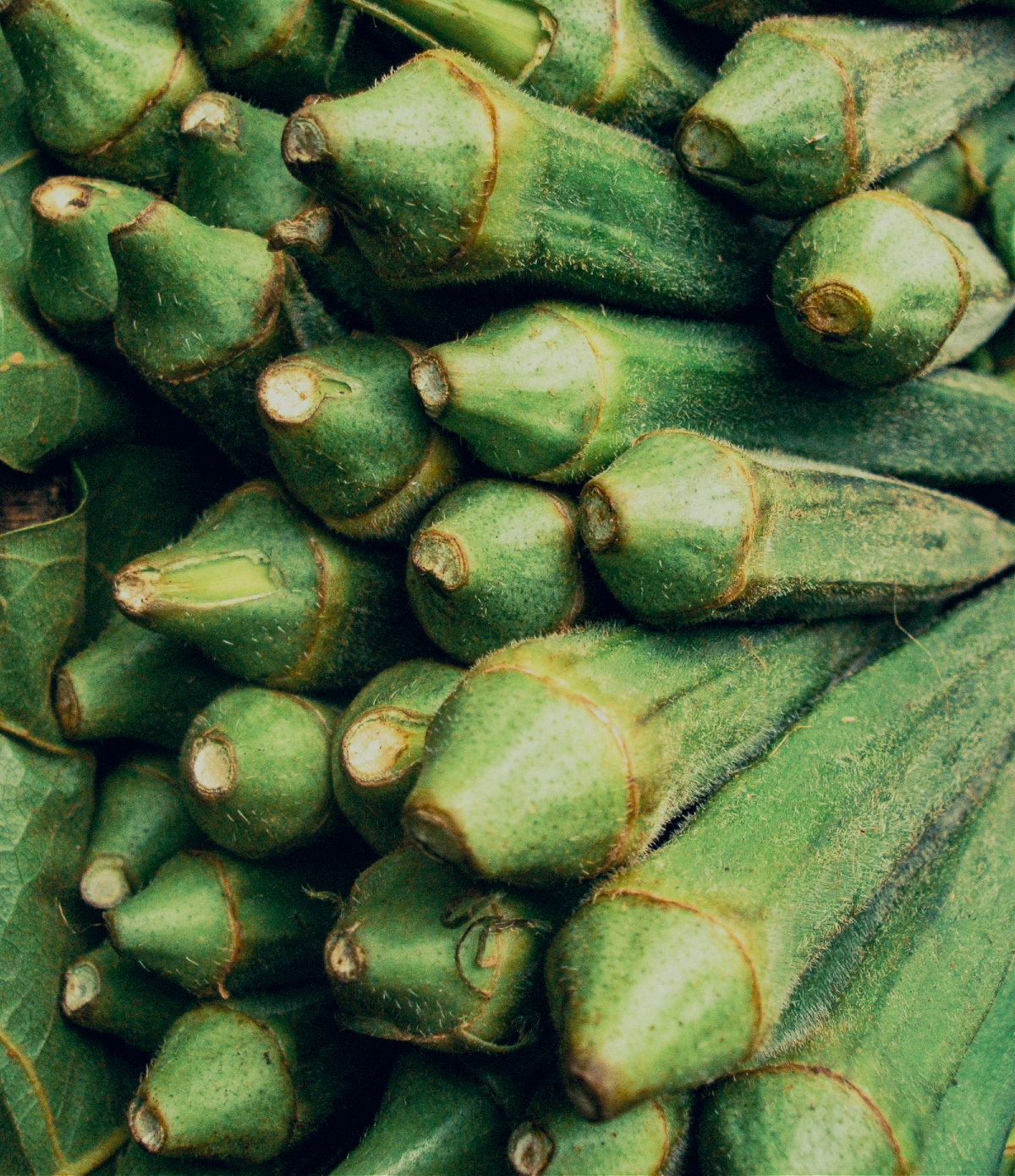
Most people reserve their summer yearnings for heirloom tomatoes or garden-fresh sweet corn, but I crave the first bite of raw okra straight from the stalk. It’s crunchy and delightful. I like to chew it, releasing the slightly sweet mucilage. The small round seeds inside have a pleasant pop and I can eat pod after pod right in the garden. If you happen to fall into the camp of the slime-averse okra-haters then perhaps I should follow my daughter’s lead and tell you it’s an okra thing, you wouldn’t understand. But I want you to understand because okra is so clearly misunderstood. It’s not just me who says so. A 2006 report commissioned by the National Academies declares that “okra could have a future that will make people puzzle over why earlier generations failed to seize the opportunity before their eyes.” The report calls okra a “Cinderella, … still living on the hearth of neglect amid the ashes of scorn.”
This post is for paying subscribers only
Subscribe now and have access to all our stories, enjoy exclusive content and stay up to date with constant updates.
This post is for paying subscribers only
Subscribe to get access to this and all premium content.