

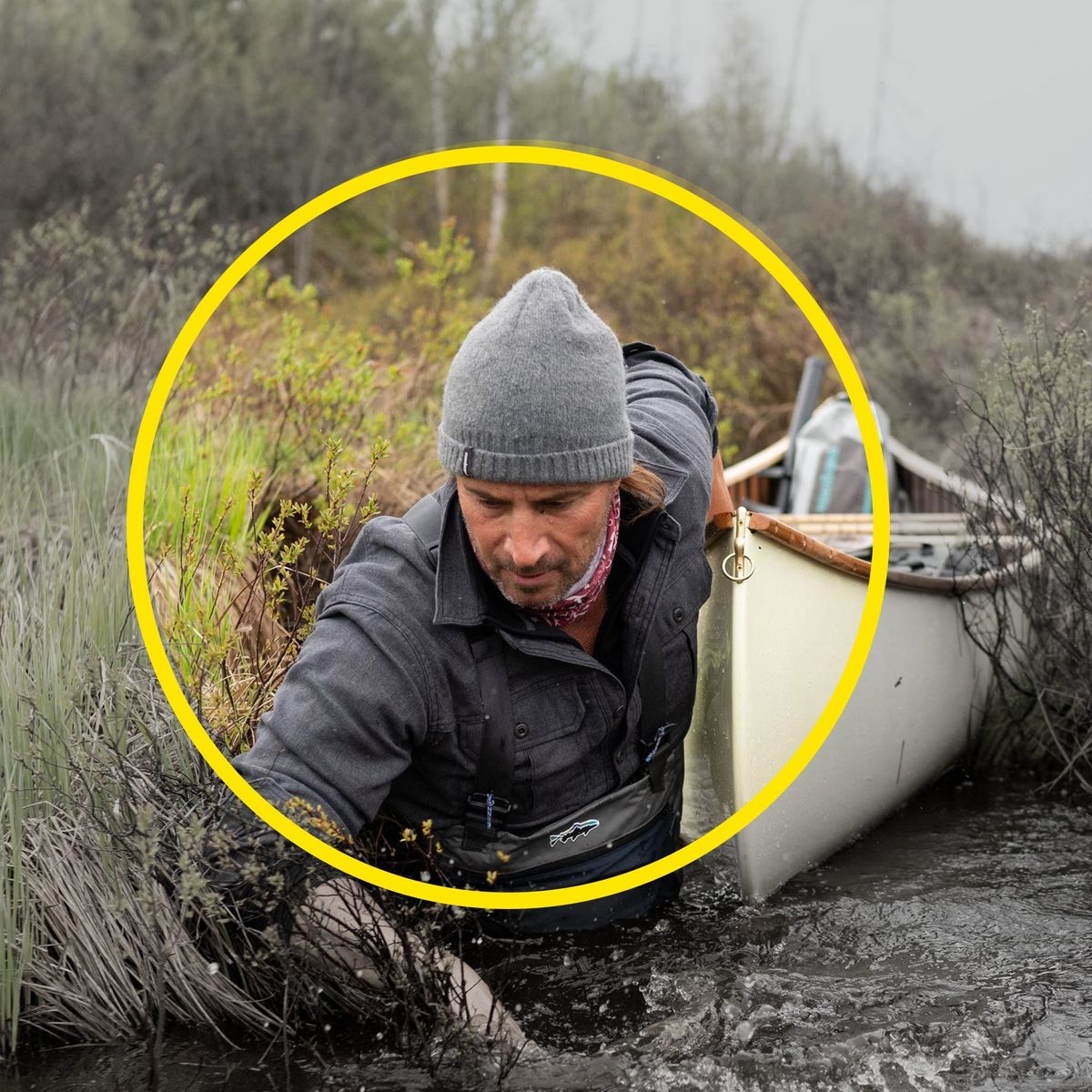
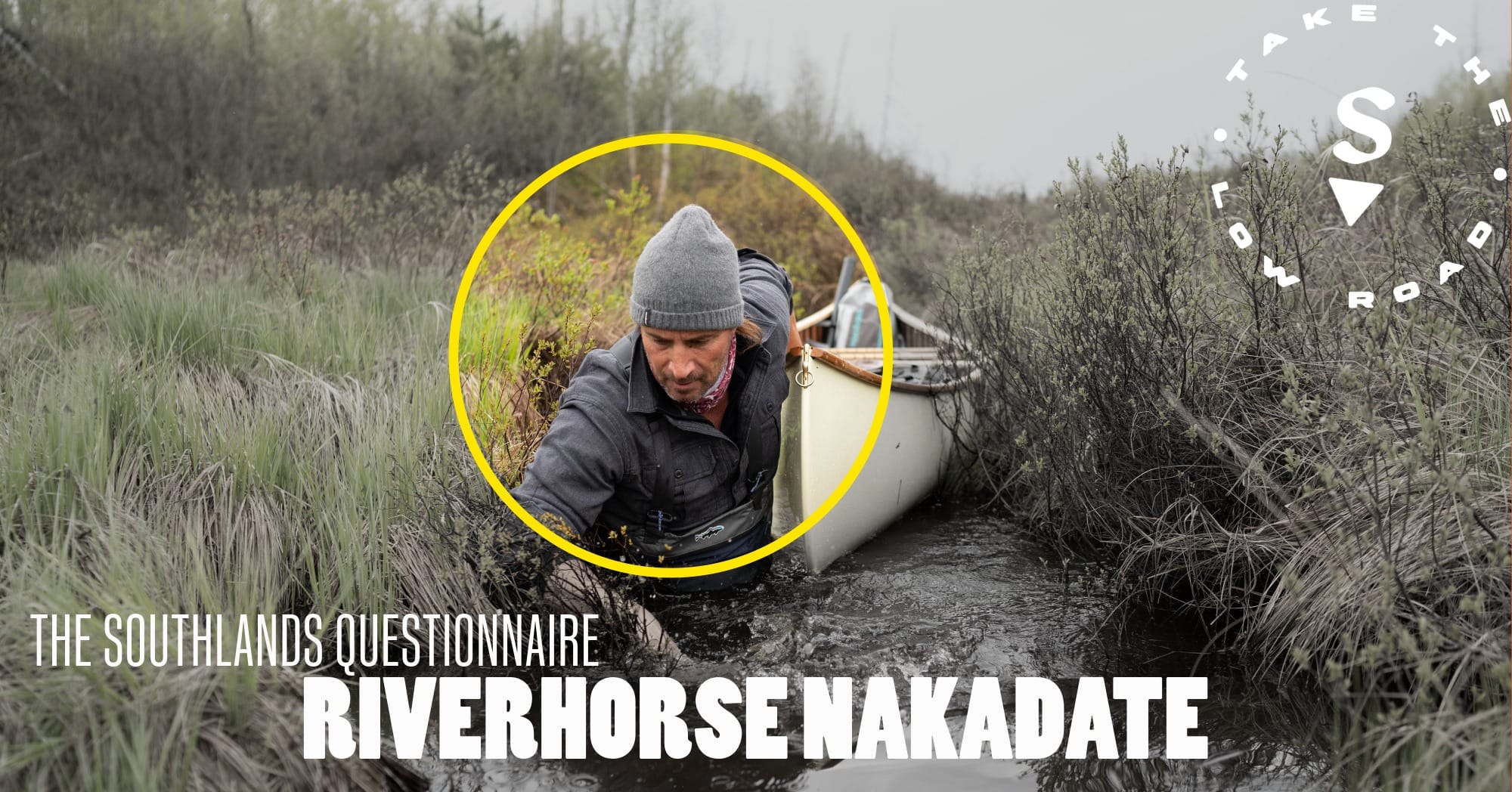
When I came across the title of Riverhorse Nakadate's new book — Water Lines: A Life on Marshes, Rivers, Seas, and in the Rain — it was the last word in the subtitle that hooked me. "I live for rain," he writes in one essay. As everyone else hunkers down for a storm, he heads out in his canoe. "Who is the fool that invented the roof," he wonders, "why is the rest of the world hiding under them instead of being out here?"
That's right, I thought: Water is not just a thing to float and fish, it's the world around us. It's the wild that comes to us, if we're patient and willing to get wet.
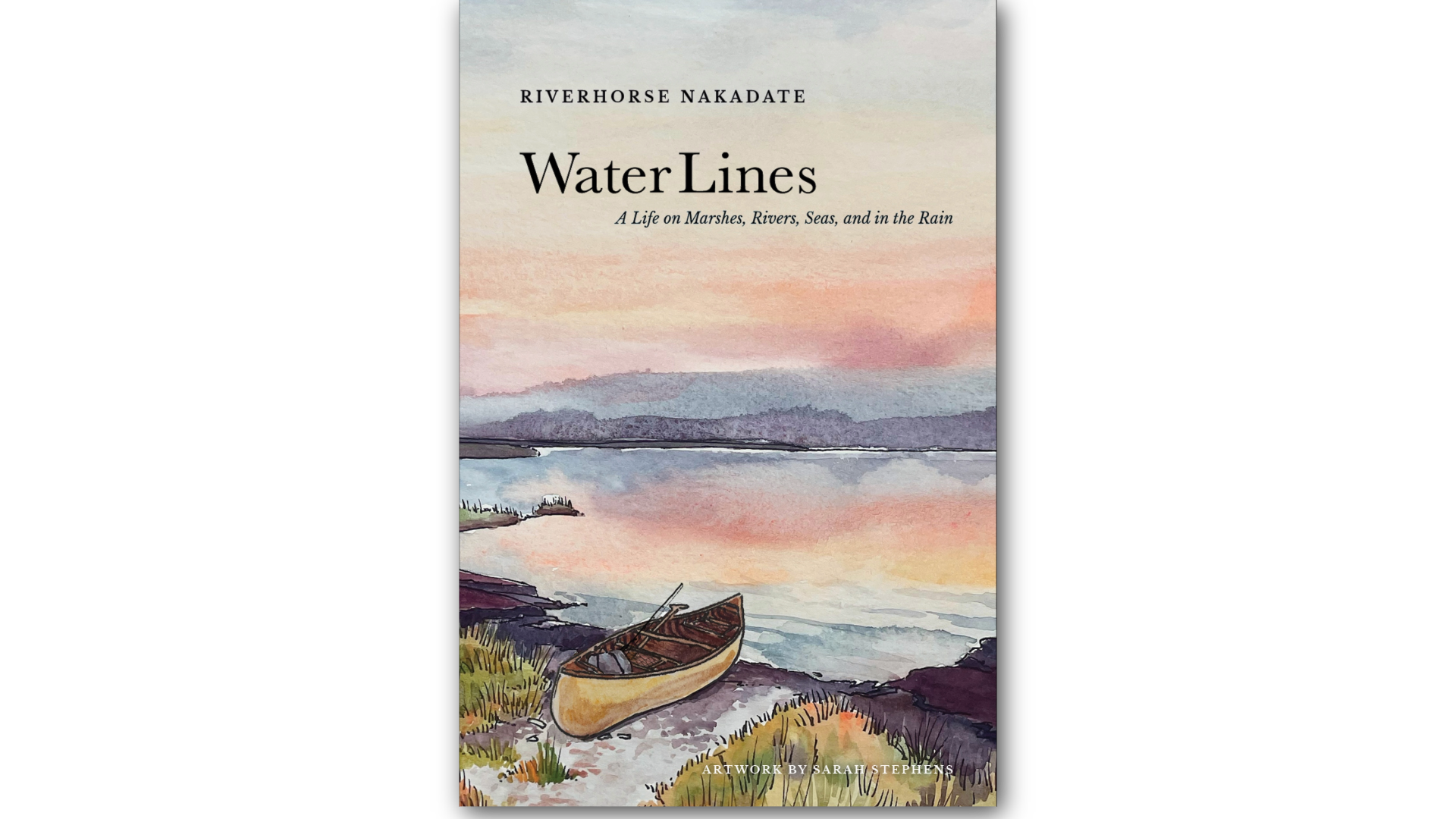
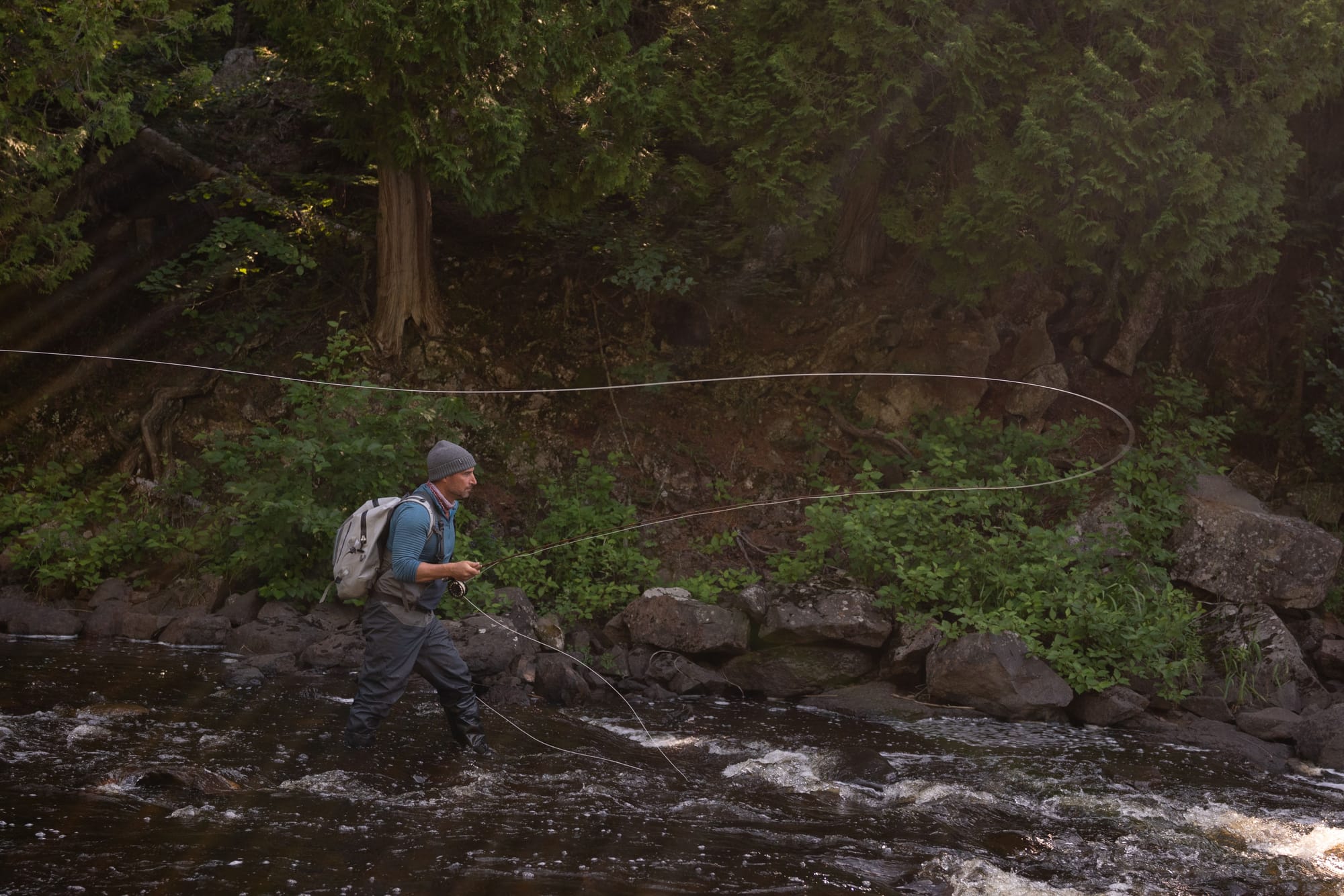
Riverhorse is a writer, musician, filmmaker, self-described nomad, and conservationist. He's also a fly-fishing ambassador for Patagonia, whose wonderful little press published this book in June. It's a beautiful artifact, with flexibound binding and soothing watercolors by Sarah Lamar Stephens that were inspired by Riverhorse's photographs.
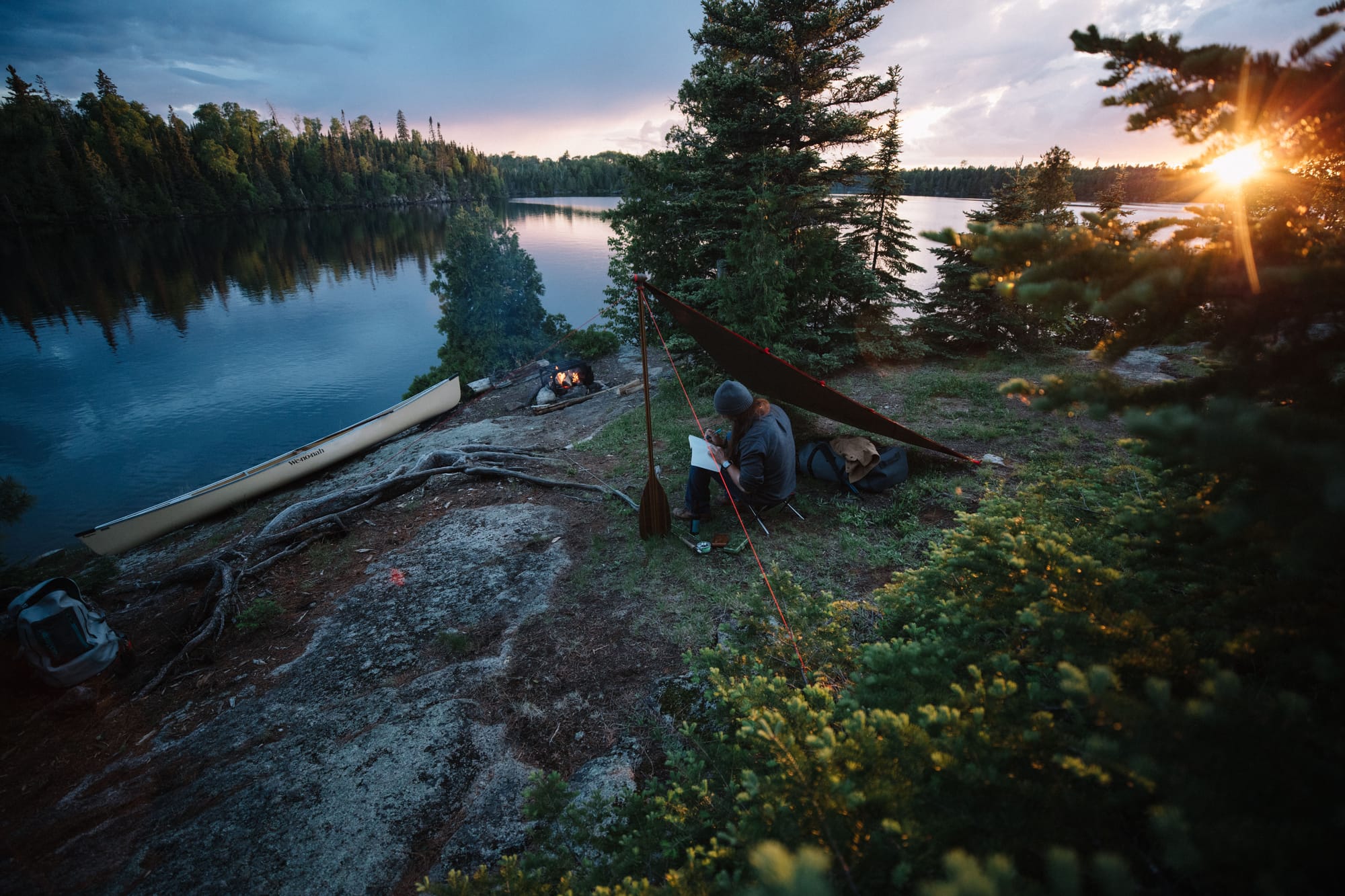
Riverhorse doesn't shy from weighty issues — he tackles, for example, the shark-finning crisis in the Gulf — but his companionable presence means the book never sinks into despair. As with all the best travel writing, what you're really getting here is not his notes on distant places, but Riverhorse's stance toward the world: you will be charmed, I promise, and hopefully inspired, by his rule of keeping the truck windows down, his temptation to fish "naked as a jaybird," his willingness to dodge honking traffic a for three slices of peach pie.
As for the distance, the essays here carry Riverhorse as far as the Arctic Circle and across the ocean to Africa. But you'll also feel his love for the Southlands. A Texas native, he lives in a 1910 bungalow in Houston, though the home he always circles back to is as much the salt marshes an hour south on the Gulf — "forever my first choice," he writes in the opening essay.
Here, in our second edition of the Questionnaire, you can get to know Riverhorse. Be sure to check out the book — and, when the next storm comes, be inspired to step outside and live.
—Boyce
What is your Southlands?
331 miles of Texas barrier islands. From a Merrimack canoe. The endless salt flats where the amber and whiskey sunbursts of first light take over the entire horizon. Egrets, herons, cranes, and spoonbills. The smell of brine, oysters, and loess. A backpack with roadside brisket and pulled pork tacos, a bottle of Shiner Bock on ice, handfuls of almonds, and a slice or two of leftover peach pie. The French press and a small titanium burner to brew and steep it wherever we are. Redfish to find on the fly rod. Solitude for seemingly endless miles. The rest of the lost and materialistic world is awash in concrete and highways, far from here.
Who taught you the thing you know best about the water?
There was never a human teacher or mentor. Only Mother Earth. Wilderness. It’s always been about time and experience alone out there, making sense of life and my place in it.
What's a skill on the water that took you years of failure to actually learn?
Slow and sensual beats fast, every time.
What's a fish story from these waters that's actually true?
I hadn’t planned on going undercover with the Coast Guard and the Texas Game Wardens to wear bullet-proof vests and chase cartel-backed, illegal long-liners and shark finners. It was as harrowing as expected, to say nothing of what we found. You can read about it in the Water Lines chapter called "Sea Glass."
What is your most important fishing rule?
The fish don’t matter, just joy.
What's a myth about the Gulf's waters you'd like to correct?
Few in the rest of the country can fathom how endlessly beautiful it is down here. Everyone thinks that you need to travel to the Caribbean or Bahamas to find surreal waters. Guess again: we have it all here, and the further south you go along our coastline, it only gets sweeter, more stunning.
How do you see the Gulf waters changing, and does that give you hope or worry?
No doubt doom and gloom abound these days, but I don’t buy it. There will always be work to do, standing up to fight for what matters. And often, things can seem darkest before the greatest light. We simply need to right the ship with kindred souls, and, of course, elect those who represent the love of public lands and waters. We can do it. But yes, what a strange ride these past few years have been.
Talk about a piece of infrastructure — a levee, a channel, a dam — that changed the way you see fishing, or the Gulf.
Rivers to the seas are arteries of life. These in the Gulf keep everything rolling full circle, and both feed and replenish our souls.
What Southern creature would you want to come back as?
I’m a fan of seagulls, blue herons, and other winged creatures along the coast. I just plain revere them, cherish them, both seeing and hearing them. Sometimes, I even take an old surfboard down to the coast during storms to ride the wind swell. Between surfing and being in the canoe gliding across the saltwater, those heady moments are when I feel like a bird.